
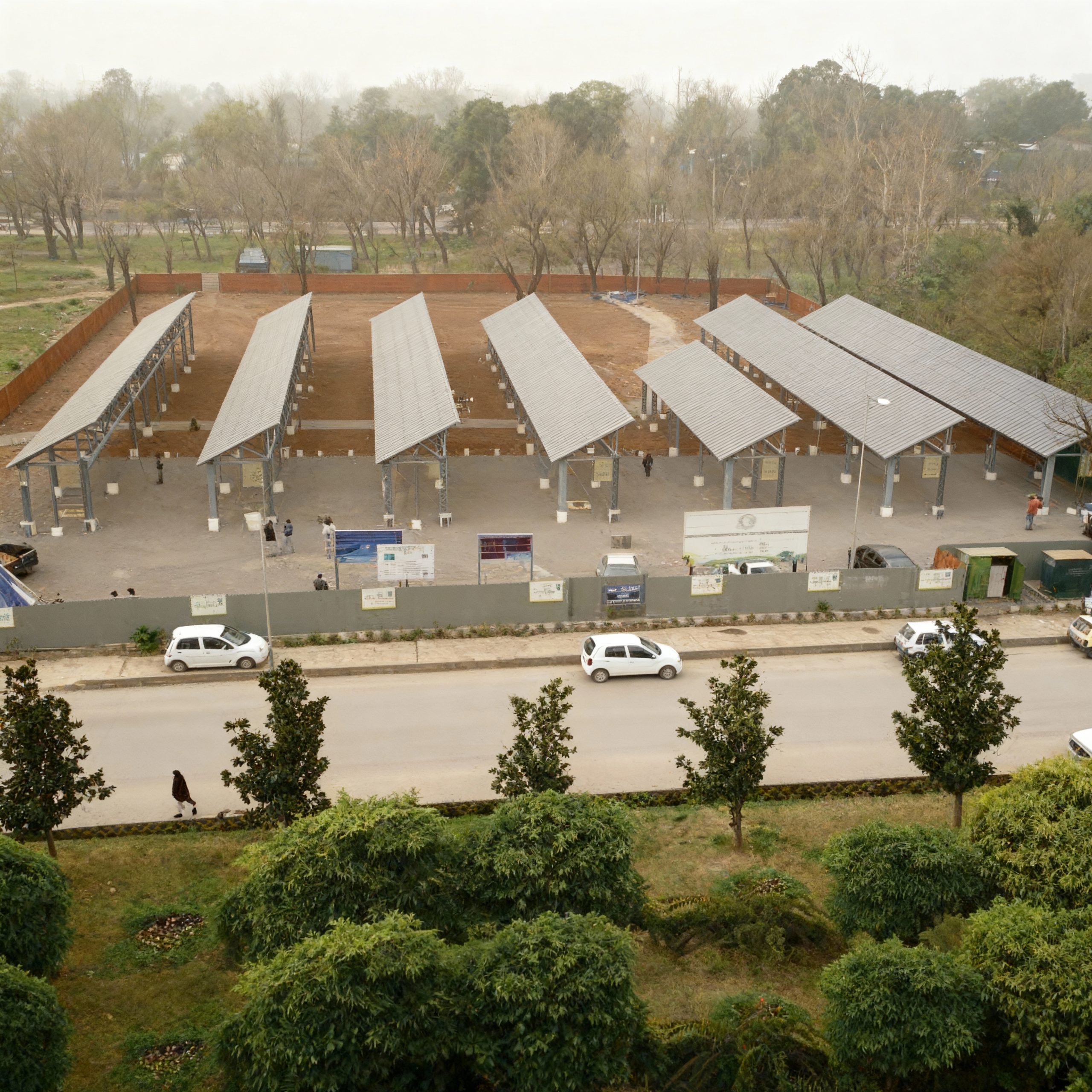
- PECT Digital
- Engineering Insights, Green Energy, Grid-Connected Solar, MEP Engineering, Net Metering, Renewable Energy, Solar Energy Pakistan
- 0 Comments
- 23661 Views
Pakistan is in the middle of a solar revolution. Rooftop installations are appearing on homes, factories, schools, and government buildings at a pace that would have seemed implausible a decade ago. Solar has become, for many facility managers and building owners, the most practical answer to both rising electricity tariffs and persistent load-shedding — and while Pakistan’s regulatory framework has recently evolved from net metering to a net billing model under the NEPRA Prosumer Regulations 2026, the economic case for solar self-consumption remains compelling.
What is less well known is how this transformation came to be — and how early the technical and policy groundwork was laid.
In 2011, PECT Private Limited was part of a landmark project that delivered Pakistan’s first-ever grid-connected solar installation. That project did not just generate electricity. It established the net metering framework that Pakistan’s entire solar industry now depends on, demonstrated the technical viability of grid-connected photovoltaics in Pakistan’s power environment, and provided the policy foundation on which every subsequent solar development — including the 100MW Quaid-e-Azam Solar Park — was built.
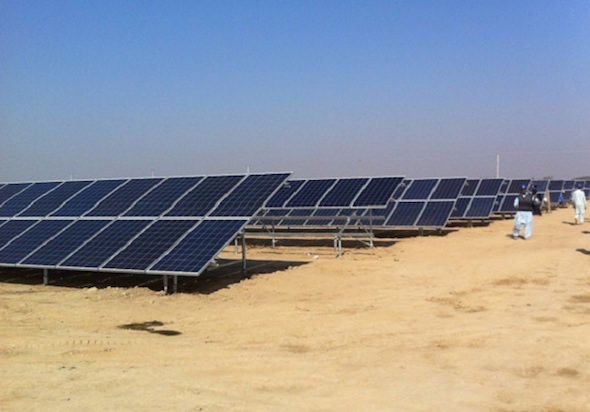
This article explores how grid-connected solar works, why it matters for Pakistan, and what facilities considering solar adoption need to understand before proceeding.
Pakistan’s Energy Challenge: The Context for Solar
Pakistan’s power sector faces a structural challenge that has defined the country’s energy story for decades. Installed generation capacity has grown substantially, but circular debt, transmission losses, fuel supply constraints, and distribution infrastructure gaps mean that load-shedding remains a persistent reality — particularly during peak summer demand when temperatures across the plains regularly exceed 45°C.
According to NEPRA’s State of Industry Reports, the gap between generation capacity and reliable supply has historically been most acute during the months when air conditioning demand peaks — precisely when Pakistan’s abundant solar resource is also at its strongest.
This alignment between peak solar availability and peak electricity demand is one of the most compelling arguments for solar adoption in Pakistan. Unlike countries where solar generation peaks in spring or autumn, Pakistan’s strongest solar resource coincides almost exactly with its heaviest grid stress. An on-grid solar system generates most when the grid needs it most — and when electricity tariffs reflect peak demand pricing.
For industrial and commercial facilities in particular, the economics of solar are increasingly difficult to ignore. As NEPRA tariff data demonstrates, commercial electricity rates have risen substantially in recent years. Solar installations with proper net metering arrangements can reduce both consumption costs and the peak demand charges that commercial consumers face.
How Grid-Connected Solar Works
Understanding solar adoption requires understanding the distinction between the two main system types: off-grid and on-grid.
Off-grid solar stores generated electricity in battery banks, providing independence from the grid but requiring significant battery investment and accepting limits on available capacity. Off-grid systems are appropriate for remote locations or facilities where grid connection is unavailable.
On-grid (grid-tied) solar connects the solar generation system directly to the public electricity grid. Generated electricity is used within the facility first; any surplus is exported to the grid. When solar generation is insufficient — at night, during cloudy periods, or under heavy load — the facility draws from the grid as normal. There is no battery storage requirement.
The critical enabling technology for on-grid solar is the grid-tie inverter — the device that converts the DC output of solar panels into AC electricity synchronized precisely with the grid’s voltage and frequency. Grid-tie inverters also incorporate protection systems that disconnect the solar installation from the grid if grid supply fails, preventing the solar system from energizing the network during maintenance — a safety requirement that grid operators worldwide mandate.
Net billing — Pakistan’s current framework is the arrangement that governs new solar connections in Pakistan as of 2026. Under the NEPRA Prosumer Regulations 2026 (effective February 9, 2026), Pakistan has transitioned from the original 1:1 net metering model to a net billing framework. The key distinction:
- Electricity imported from the grid is purchased at full retail consumer rates
- Surplus electricity exported to the grid is bought back at the national average energy purchase price — significantly lower than the retail import rate
- Existing net metering contracts signed before February 9, 2026 remain legally protected and continue under their original terms until their initial contract period expires
- New installations fall under the net billing framework, with a standard 5-year agreement term
The practical implication of this policy shift is important for system design: maximising self-consumption — using as much solar-generated electricity within the facility as possible rather than exporting it — has become the primary driver of solar economics for new installations. A properly sized system that matches generation to facility load profile delivers the strongest return under the net billing framework. Oversized systems that generate significant surplus export at lower buyback rates will underperform against their projected returns.
This makes accurate load analysis and system sizing more important than ever — and reinforces the value of working with qualified electrical engineers rather than relying on generic sizing rules. The original net metering framework that Pakistan’s first grid-connected solar project helped establish in 2011 has now evolved into a more sophisticated prosumer model — but the fundamental economics of solar self-consumption remain strongly positive.
Pakistan’s First Grid-Connected Solar Installation (2011-12)
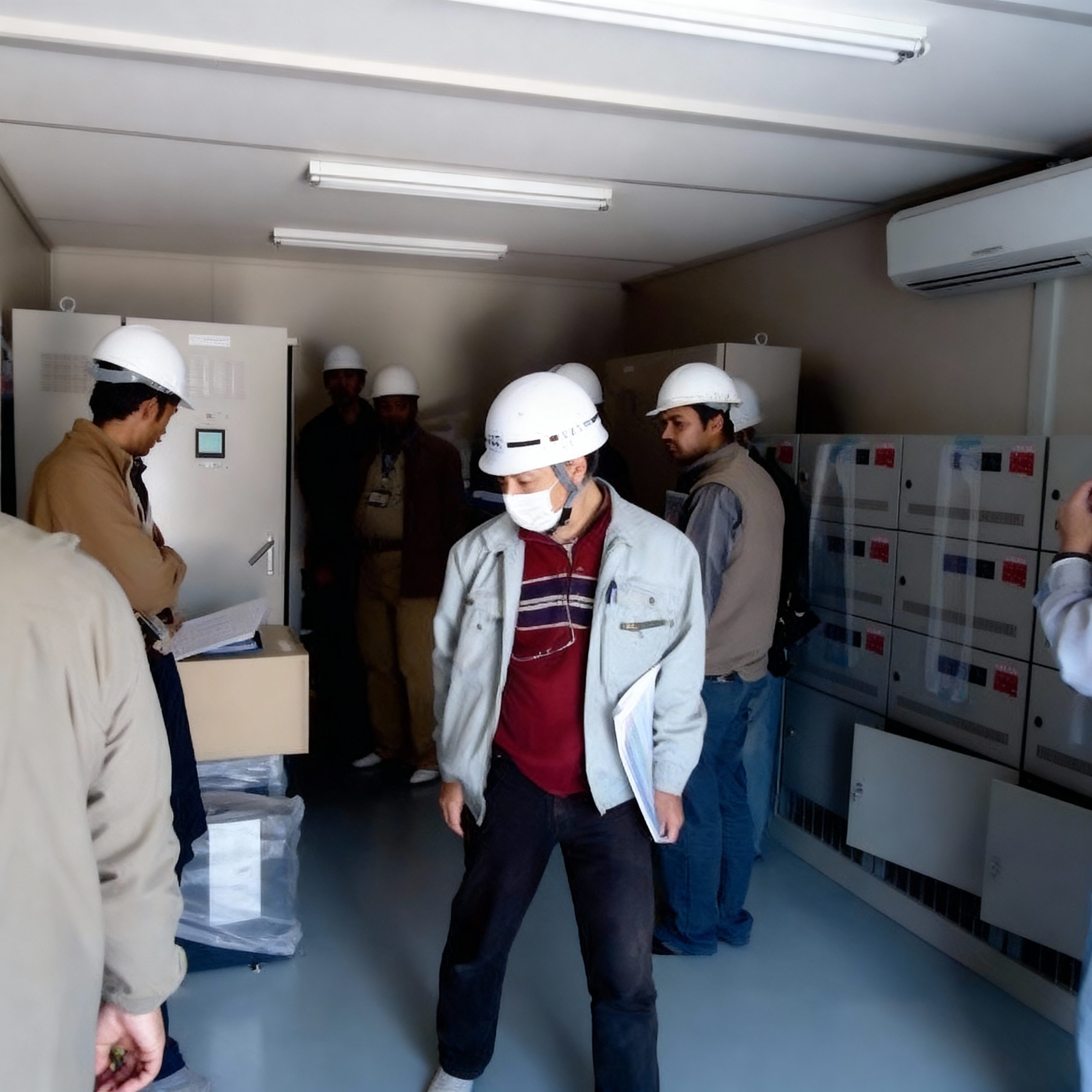
In 2011-12, PECT Private Limited delivered the complete electrical integration for Pakistan’s pioneering on-grid photovoltaic system — at the Pakistan Engineering Council and Planning Commission buildings in Islamabad. This PKR 40 million project, delivered under Japanese Grant Aid with Tobishima Corporation as main contractor and Mitsubishi Electric as equipment supplier, was the first demonstration of grid-connected solar viability in Pakistan’s power environment.
The scope of PECT’s electrical integration work covered the full system:
 Solar PV Panel Installation — Mono-crystalline solar panel arrays installed across the two government buildings, engineered for maximum yield within the available roof and ground-mounted area.
 Grid-Tie Inverter Systems — High-efficiency power conditioning equipment converting solar DC output to grid-synchronized AC, supplied by Mitsubishi Electric to Japanese engineering standards.
 Smart Metering Infrastructure — Bi-directional metering enabling measurement of both consumption from and export to the grid — the physical implementation of what would become Pakistan’s net metering framework.
 Safety and Protection Systems — Junction boxes, surge protection devices, and safety disconnects for maintenance and emergency isolation.
 Meteorological Monitoring — Environmental monitoring systems enabling ongoing performance analysis and yield verification against design projections.
 Power Conditioning and Distribution — Complete low voltage switching panels, step-up transformers, and distribution infrastructure integrating the solar generation with the buildings’ existing electrical systems.
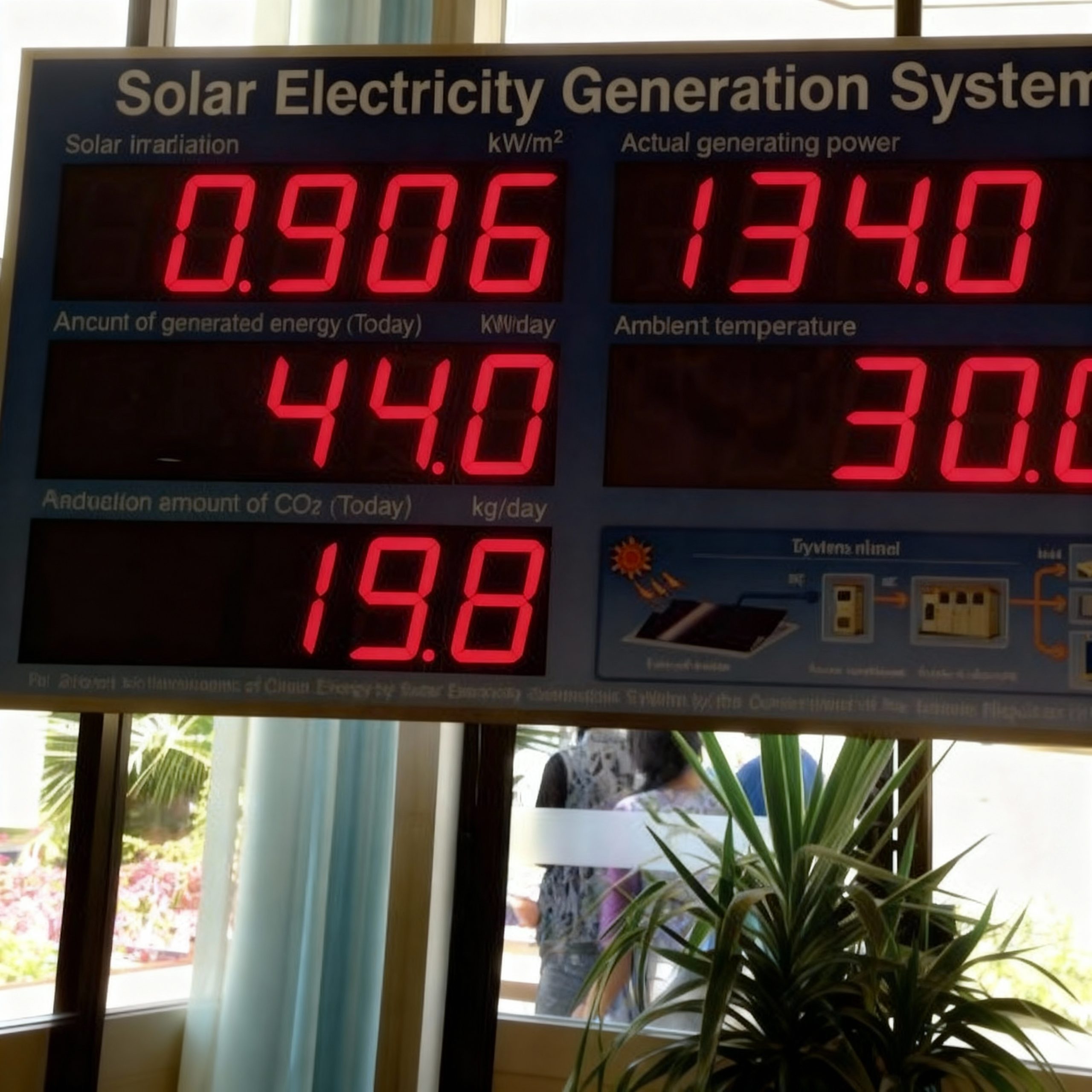
The results have been sustained over more than a decade of operation. The installation generates over 500,000 kWh annually — reducing CO2 emissions by approximately 300 tons every year. More significantly, the project demonstrated to Pakistan’s power sector regulators that grid-connected solar could be installed, operated, and metered reliably in Pakistan’s network environment — providing the technical evidence base for NEPRA’s subsequent net metering regulatory framework.
What Facilities Need to Know Before Going Solar
Pakistan’s solar boom has created significant opportunity — but also a market where the quality of installations varies enormously. For facility managers and building owners considering solar, understanding what separates a well-engineered installation from a poorly executed one is essential.
System Sizing
The most common error in solar installation is incorrect system sizing — either undersizing (leaving significant consumption unaddressed) or oversizing (generating more than can be usefully consumed or exported under the facility’s net metering arrangement). Proper sizing requires accurate load analysis, consumption profile review, and understanding of the facility’s grid connection capacity.
Inverter Quality and Specification
The grid-tie inverter is the most technically critical component of an on-grid solar system. Inverter specification must match the panel array output, the grid connection parameters, and the facility’s load profile. Inverter reliability determines system availability — a failed inverter stops generation entirely. For critical facilities, inverter redundancy or rapid replacement agreements are worth considering.
Structural Assessment
Solar panel arrays impose structural loads on the roofs or ground-mounting structures that support them. Before installation, a structural assessment should confirm that the host structure can safely carry the additional load across the system’s 25+ year design life. This assessment is frequently skipped in the lower end of Pakistan’s solar market — with potentially serious long-term consequences.
Grid Connection and Prosumer Compliance
On-grid systems must be connected to the distribution network in compliance with the distribution company’s technical requirements and the NEPRA Prosumer Regulations 2026. Under the new framework, the total capacity of a solar installation cannot exceed the sanctioned load of the consumer’s premises — a constraint that must be factored into system design from the outset. Improper grid connection creates safety risks for distribution network maintenance staff and can result in the prosumer application being rejected. A qualified electrical contractor familiar with distribution company requirements and the current regulatory framework is essential for this aspect of the installation.
Commissioning and Performance Verification
A solar installation is not complete when the panels are mounted and the inverter is connected. Commissioning requires verification of actual generation output against design projections, confirmation of correct meter operation in both import and export directions, and documentation of system performance for warranty and maintenance purposes.
PECT’s Current Solar and Renewable Energy Capabilities
Building on the experience of Pakistan’s pioneer grid-connected solar project, PECT’s renewable energy capabilities today cover the full scope of modern solar installation:
 On-Grid Solar System Installation and Commissioning — Complete electrical integration from panel array to grid connection, including inverter installation, metering, and distribution system integration.
 Hybrid Solar-Generator Systems — For facilities requiring both solar cost reduction and load-shedding resilience, hybrid systems combine solar generation with diesel backup, with intelligent control systems managing the transition between sources.
 Prosumer Registration and Grid Interconnection — Complete preparation of the technical documentation, bi-directional metering infrastructure, and distribution company liaison required for prosumer approval under NEPRA’s 2026 framework — including system sizing to comply with sanctioned load limits.
 Grid-Tie Inverter Systems — Selection, installation, and commissioning of grid-tie inverters matched to panel array specification and facility connection requirements.
 Performance Monitoring Systems — Online monitoring infrastructure providing real-time generation data, performance analysis, and fault detection across the system’s operational life.
Learn more about PECT’s electrical engineering capabilities at our Capabilities page. For facilities requiring integrated MEP solutions alongside solar — including backup power, electrical distribution, and HVAC — explore PECT’s complete service range.
Pakistan’s Solar Future
Pakistan’s Alternative Energy Development Board (AEDB) has set ambitious renewable energy targets — with the government’s policy framework targeting 30% renewable electricity by 2030 and 60% by 2030 under various scenarios. Solar, given Pakistan’s exceptional solar resource and rapidly falling panel costs, is expected to constitute the largest share of this renewable expansion.
For industrial and commercial consumers, the economics are already compelling. For the public sector — ministries, healthcare, and educational institutions — solar offers the dual benefit of operating cost reduction and reduced dependence on a grid whose reliability remains inconsistent.
The technical foundation for Pakistan’s solar expansion was laid over a decade ago. The question for facility owners and managers today is not whether solar makes sense — it is how quickly they can implement it to start capturing the benefits.
Engineering Pakistan’s Renewable Energy Transition
Pakistan’s solar revolution is not happening by accident. It is the result of pioneering technical work, regulatory development, and equipment innovation that began — in Pakistan’s case — with a 380KW installation at two government buildings in Islamabad in 2011.
PECT was part of that beginning. As Pakistan’s solar sector accelerates toward its most ambitious expansion yet, we bring the same commitment to engineering quality, proper commissioning, and long-term system reliability that has defined our MEP practice for over three decades.
Because solar energy installed correctly — sized properly, commissioned thoroughly, and maintained consistently — is not just a cost reduction. It is a generation asset that serves a facility for twenty-five years or more.
That is the standard Pakistan’s solar transition deserves. That is the standard PECT delivers.