- PECT Digital
- 0 Comments
- 151 Views
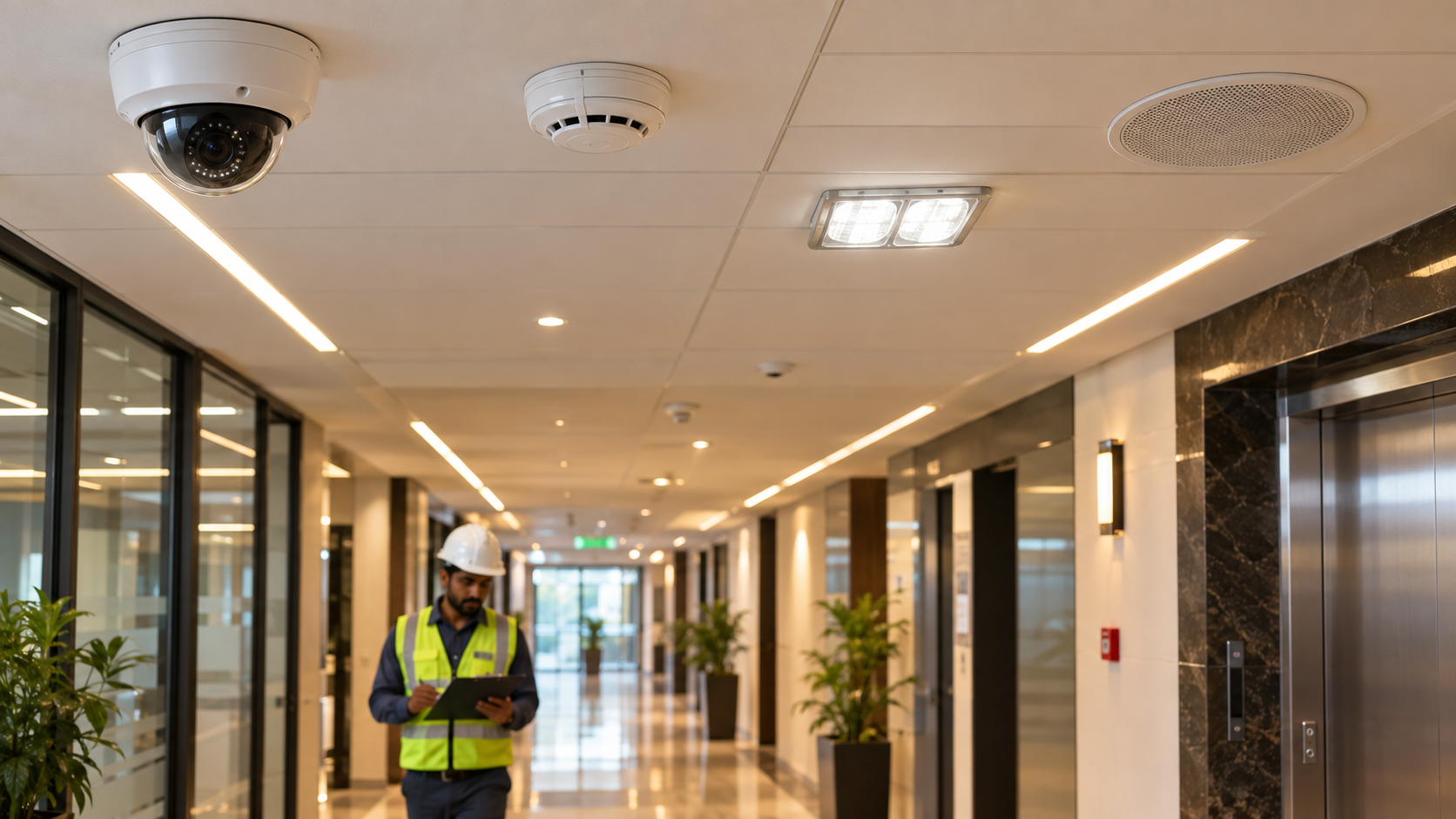
When people think about MEP engineering, the first systems that come to mind are usually the most visible ones: electrical distribution, air conditioning, plumbing. Communication and security systems — the networks of cameras, alarms, intercoms, public address speakers, and access control devices that run through a modern building — are less prominent. They live in ceiling voids, conduit runs, and server rooms. They operate in the background.
Until something goes wrong.
A fire alarm that doesn’t activate. A CCTV system that didn’t record. A public address system that couldn’t reach the evacuation point where it was needed. In those moments, the quality of a building’s communication and security infrastructure stops being invisible — and its importance becomes impossible to ignore.
At PECT Private Limited, communication and security systems have been part of our electrical engineering scope across three decades of installations — from post-conflict diplomatic compounds in Afghanistan to manufacturing facilities in Karachi, from technical education campuses in Lahore to healthcare institutions in Islamabad. This article explores what a properly executed communication and security installation involves — and why it deserves the same engineering rigour as any other building system.
What Communication & Security Systems Cover
Communication and security systems are not a single system — they are a family of interconnected disciplines, each serving a distinct function but often sharing cabling infrastructure, power supplies, and control interfaces.
A complete installation typically encompasses:
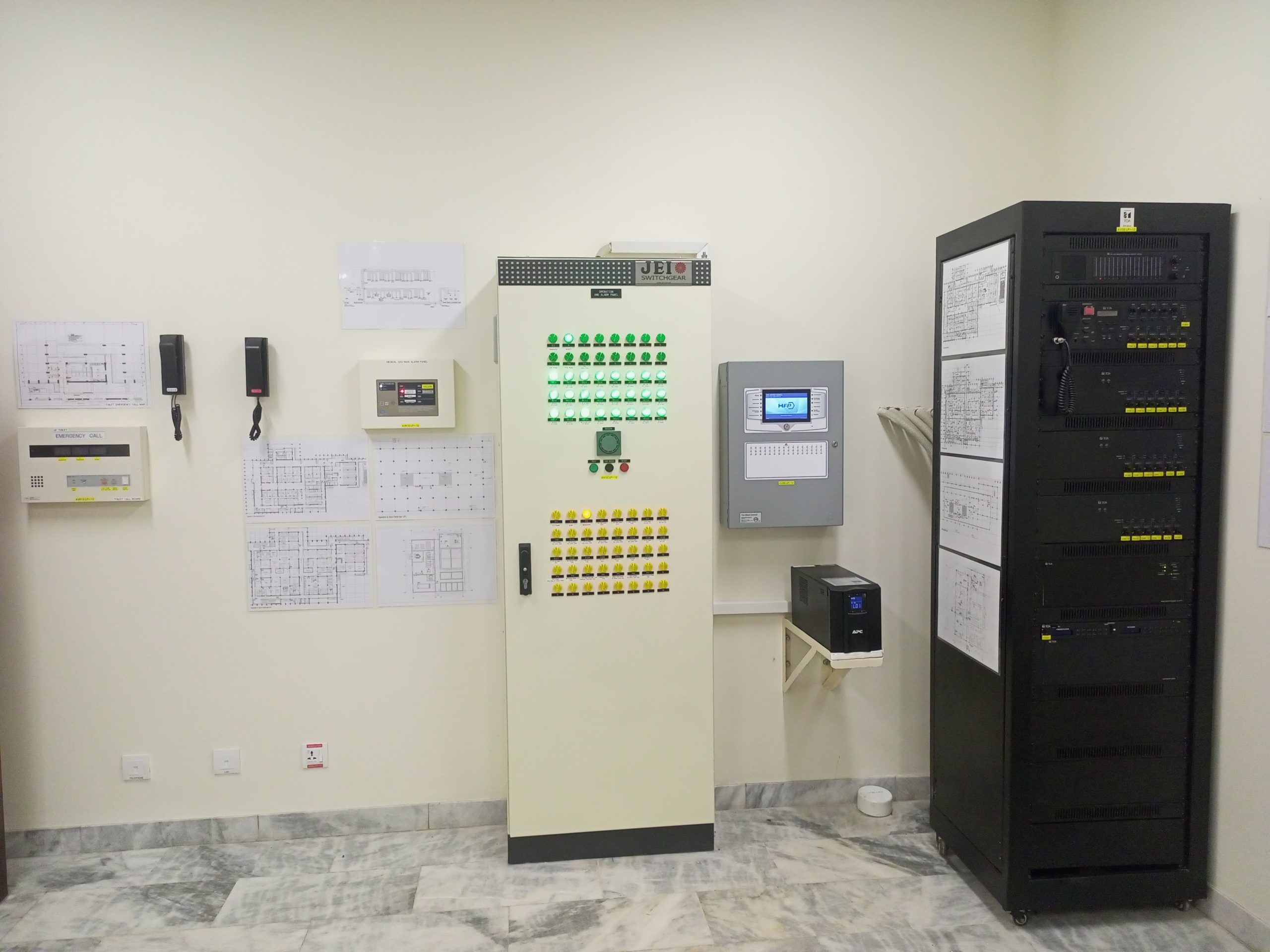
Fire Alarm & Detection Systems — The most safety-critical of all communication systems, fire alarm networks detect smoke, heat, or flame and trigger audible and visual alerts throughout a building. NFPA 72: National Fire Alarm and Signalling Code is the internationally recognised standard governing fire alarm system design, installation, and maintenance — defining detection device placement, alarm notification requirements, and system reliability standards that life safety demands. PECT has installed Hochiki addressable fire detection systems — advanced equipment that provides precise location identification, telling building management not just that a detector has activated, but exactly where: room number, zone, and wing. In large or complex facilities, this precision is the difference between an evacuation that is targeted and efficient, and one that is building-wide and disruptive.
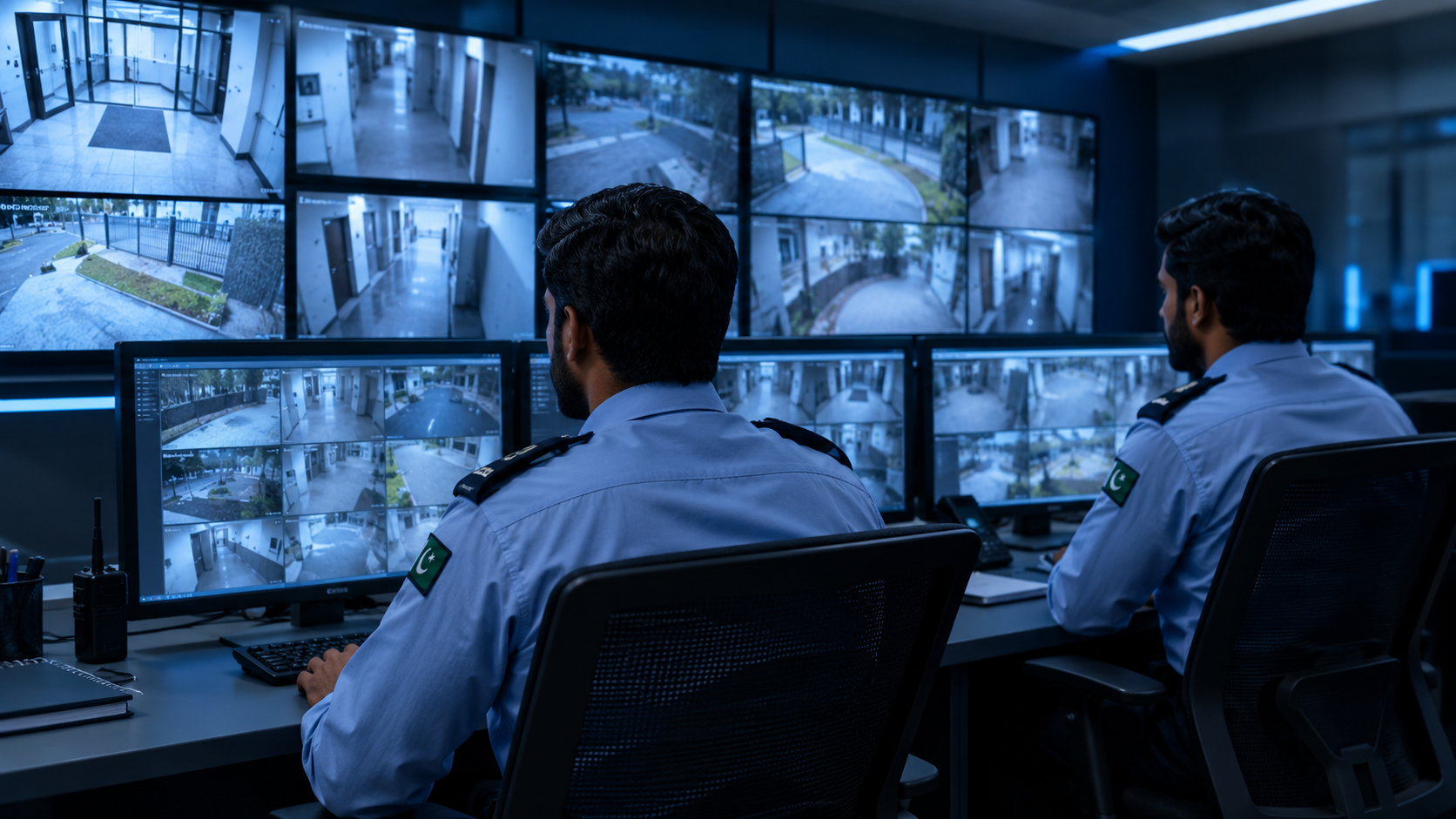
CCTV & Surveillance Systems — Closed-circuit television networks provide continuous visual monitoring of a facility’s internal and external areas, supporting both real-time security management and post-incident investigation. Modern CCTV installations incorporate IP-based camera networks, digital video recording, remote access capability, and integration with access control systems. Camera placement, field of view, lighting conditions, and recording retention periods are all engineering decisions that determine whether a surveillance system is genuinely useful or merely decorative.
Public Address (PA) Systems — PA infrastructure enables facility-wide voice communication for routine announcements, emergency instructions, and evacuation coordination. In large or multi-building facilities, PA systems are zoned to allow targeted communication to specific areas — directing people appropriately during emergencies rather than broadcasting undifferentiated alerts to an entire campus. The International Fire Code (IFC) and NFPA standards require emergency voice communication systems in many categories of large or high-occupancy buildings.
Access Control & Motorized Gate Systems — Electronic access control manages who enters a facility, when, and through which access points. From keycard readers and biometric systems to motorized vehicle gates with screening capability, access control infrastructure is the physical enforcement layer of a facility’s security policy. Integration with CCTV allows access events to be correlated with video footage — critical for security investigation and incident management.
PABX & Intercom Systems — Private Automatic Branch Exchange (PABX) telephone infrastructure and intercom networks provide internal communication across large facilities. In hospitals, manufacturing plants, and institutional buildings, reliable internal communication is an operational necessity — supporting both routine coordination and emergency response.
LAN & Structured Cabling — Data communication infrastructure — the physical network of cables, switches, and termination points that supports internet connectivity, VoIP telephony, building management systems, and security network integration — is increasingly the backbone of all other building systems. A well-designed structured cabling system supports current requirements and anticipates future technology upgrades without requiring wholesale replacement.
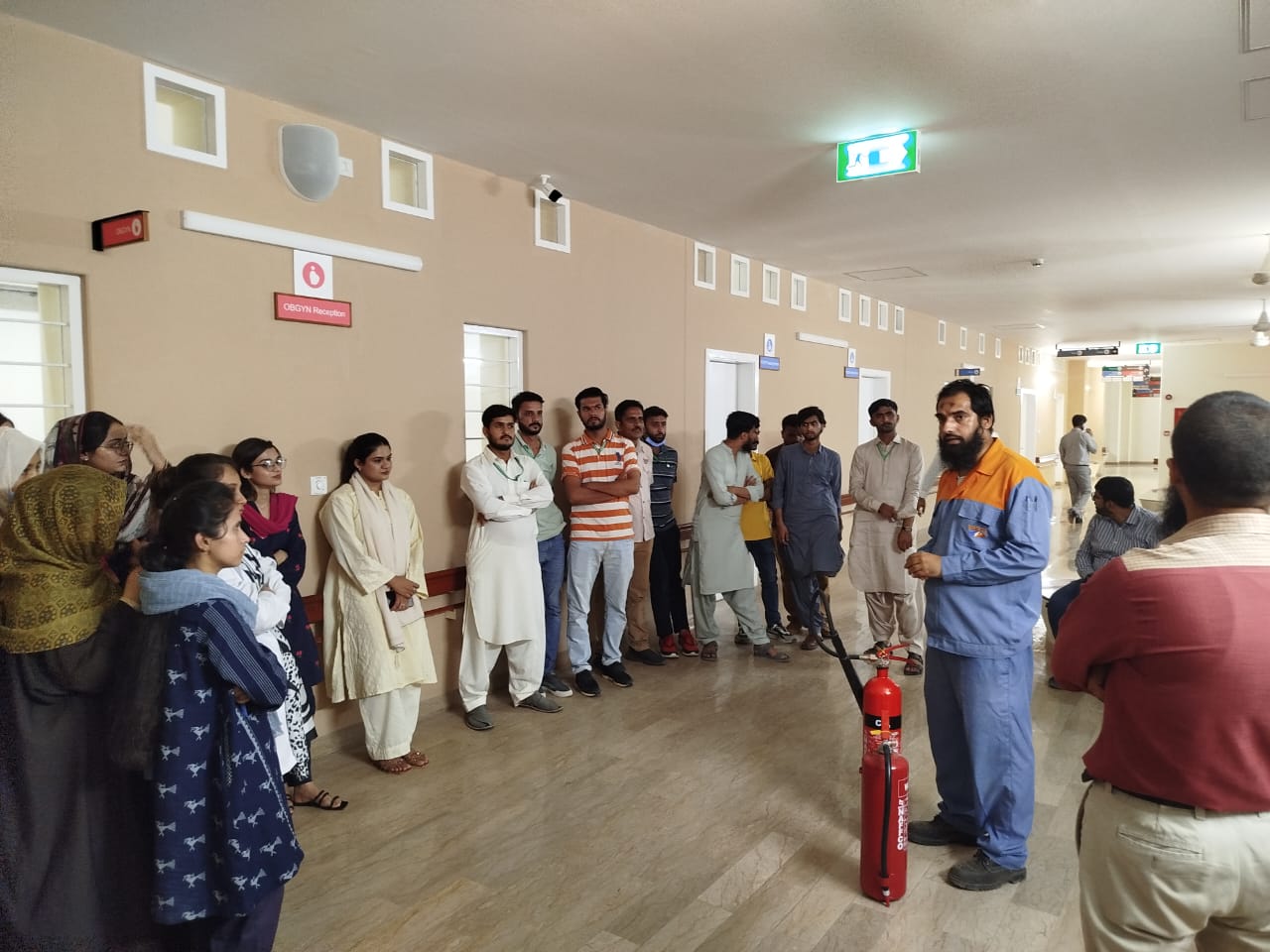
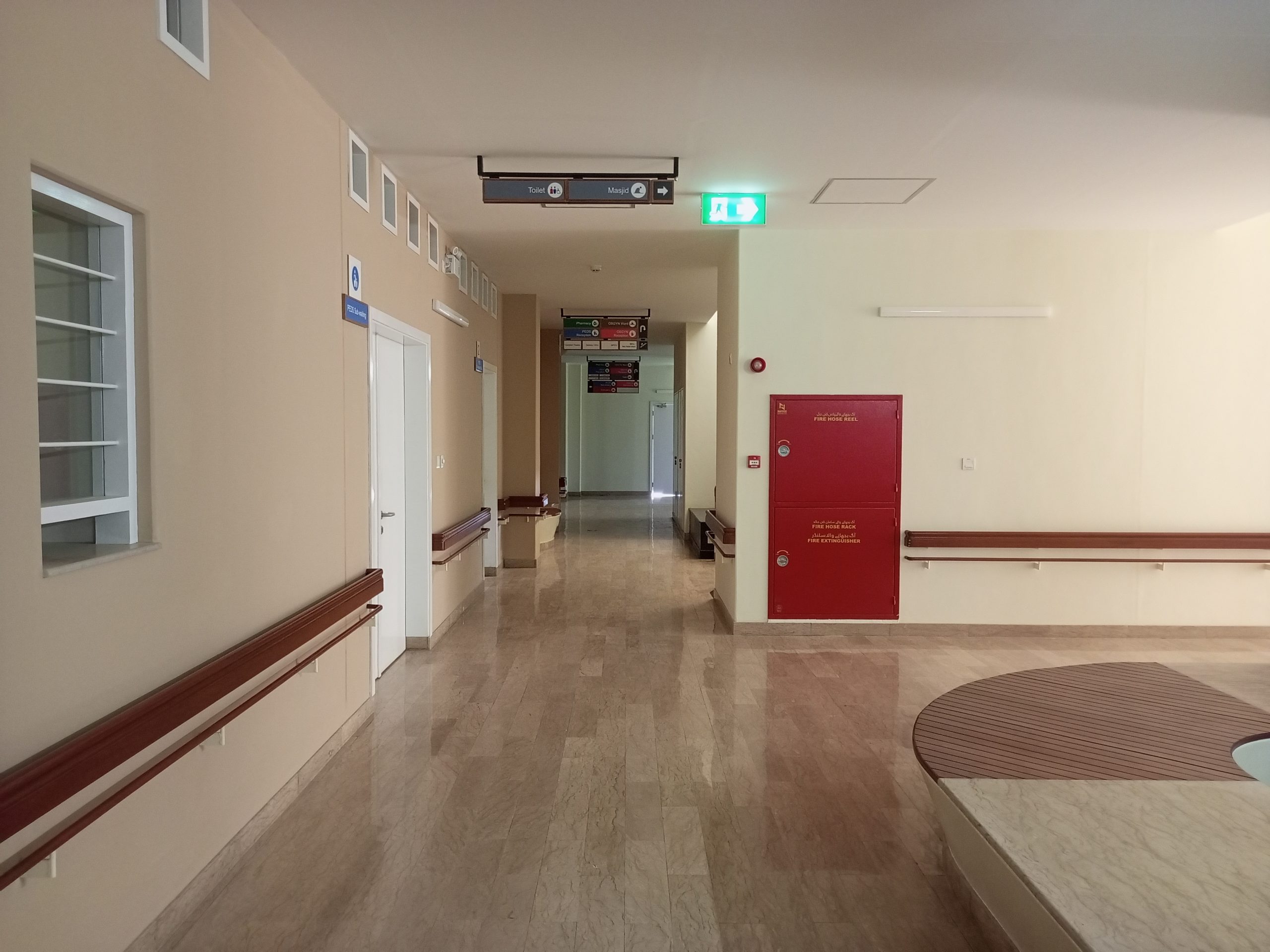
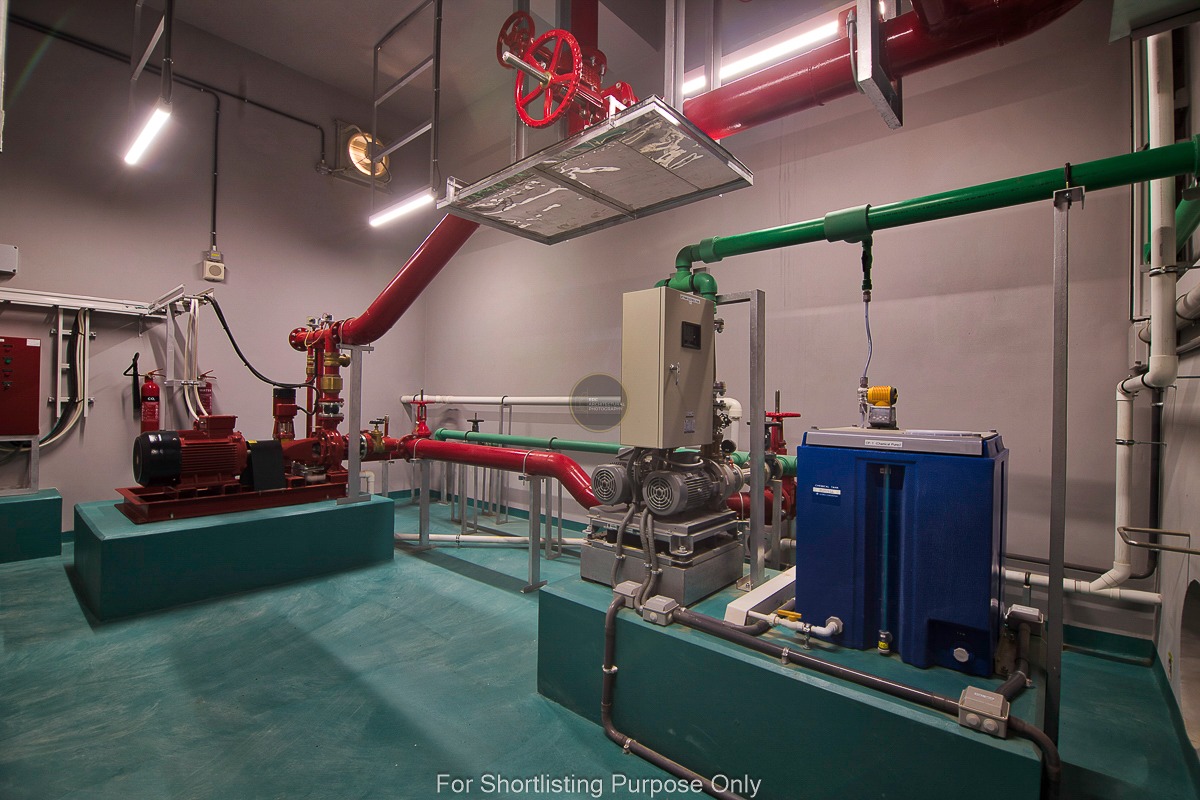
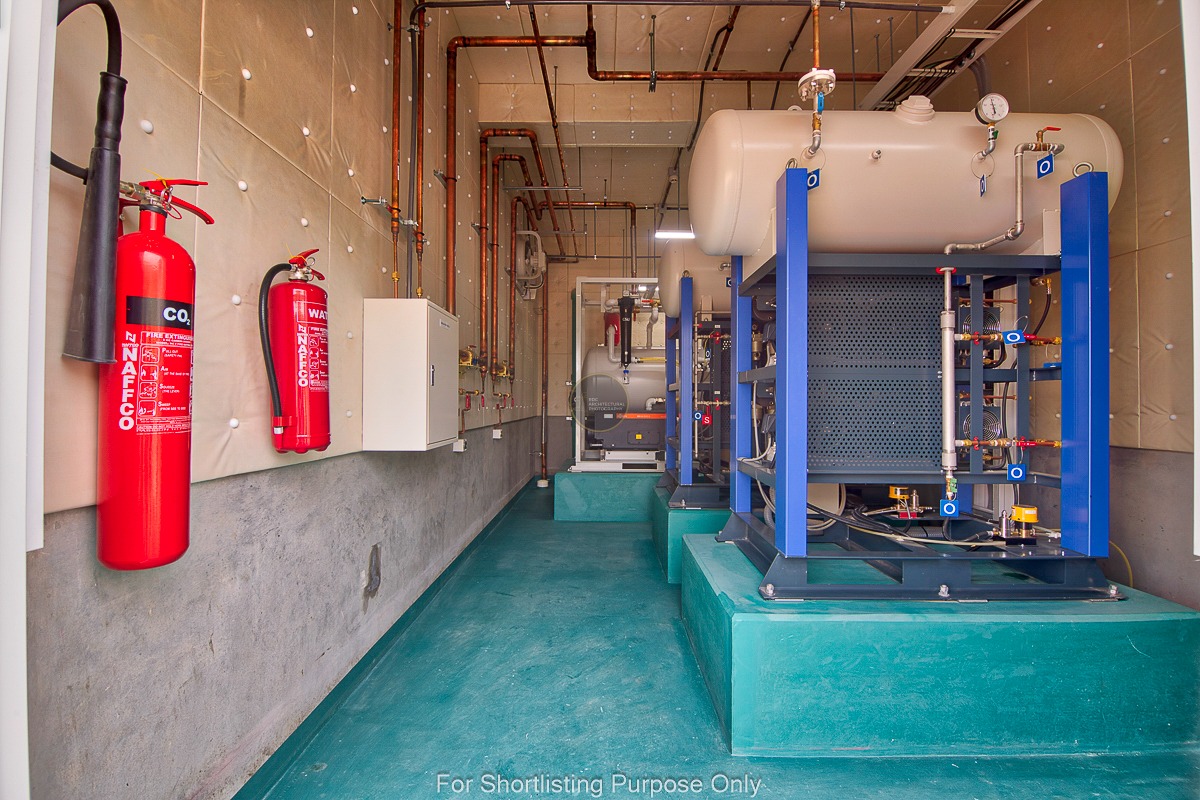
Fire Suppression & Firefighting Systems — While fire detection alerts occupants and management to a fire event, suppression systems are the active response infrastructure that controls or extinguishes it. Fire hydrant networks, firefighting pumps, and pressurised water distribution systems form the mechanical backbone of a building’s fire suppression capability. PECT has delivered firefighting pump installations including Naffco fire pump systems — industrial-grade equipment capable of delivering high-pressure water throughout a facility’s hydrant network at the flow rates that large-scale fire suppression demands. Most recently, a Naffco firefighting pump system was installed as part of the comprehensive MEP package at the LUMHS Child Health Institute Extension in Jamshoro — a healthcare facility where fire suppression reliability is directly tied to patient safety.
Emergency Lighting — Battery-backed lighting systems that activate on power failure, illuminating escape routes and exit signage to enable safe evacuation. IEC 60598-2-22 governs emergency luminaire requirements internationally, specifying maintained and non-maintained operation modes and the minimum illumination levels that evacuation routes must achieve.
Fire Alarm Systems: Life Safety Above All
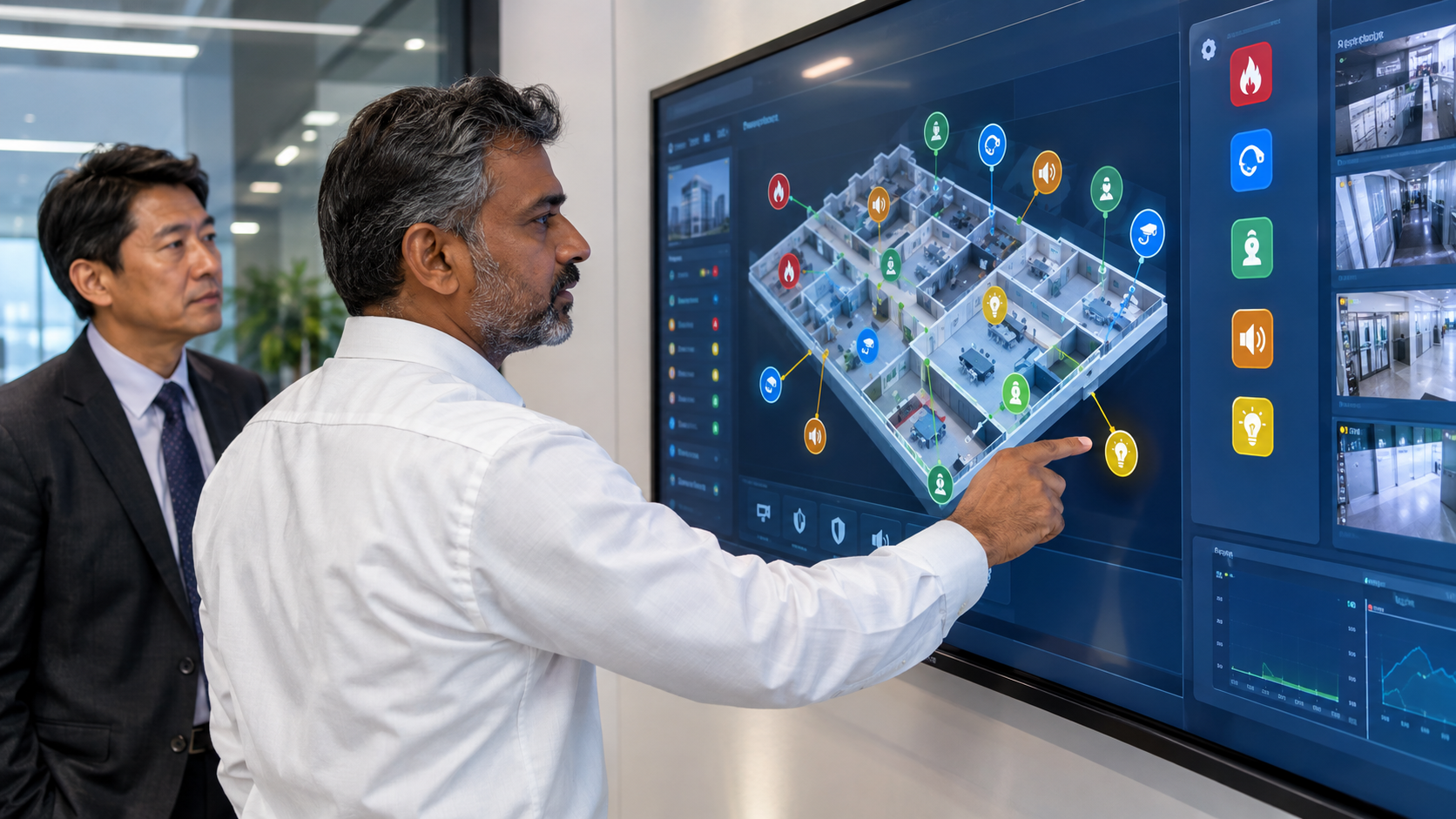
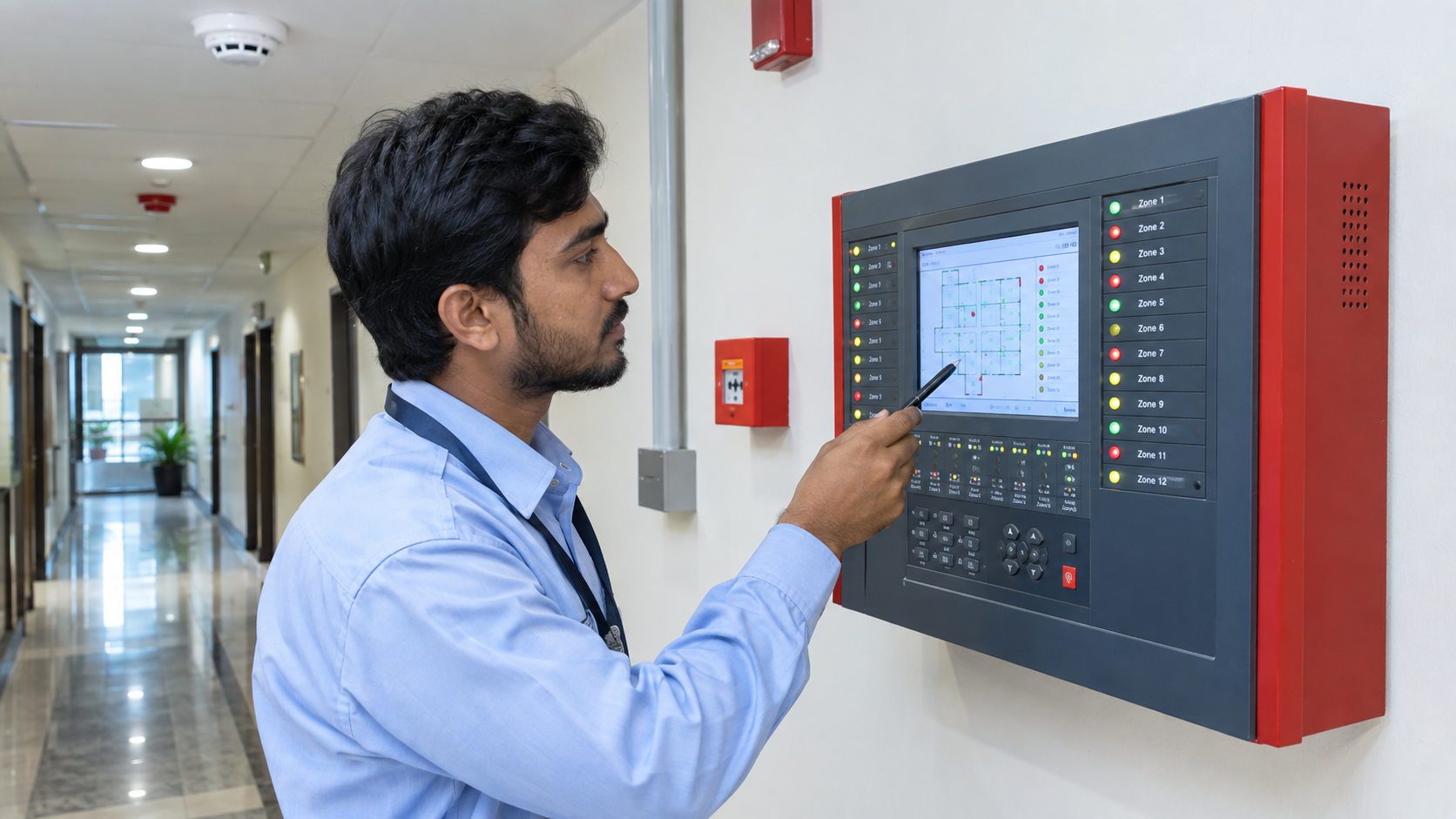
Of all the systems within the communication and security discipline, fire alarm is the one where engineering quality is most directly linked to human survival. A fire alarm system that fails to activate, activates too slowly, or fails to communicate effectively during an emergency does not merely inconvenience — it endangers.
Proper fire alarm engineering covers far more than installing detectors and sounders. It requires careful zoning to ensure that alarm activation in one area is correctly reported to a central control panel and communicated to the right people. It requires detector type selection matched to the expected fire signatures in each area — smoke detectors in offices, heat detectors in kitchens and plant rooms, beam detectors in large open spaces. It requires integration with building management systems, emergency lighting, and HVAC shutdown sequences that contain smoke spread. And it requires commissioning that tests every detector, every sounder, and every response sequence before occupancy.
A fire alarm system that is correctly installed but incorrectly commissioned is, in practice, an untested system — one whose failure mode during a real fire event is unknown.
PECT installs fire alarm systems to NFPA 72 international standards across healthcare, educational, industrial, and diplomatic facilities — with commissioning that verifies system-wide performance before handover.
CCTV Systems: Coverage That Matters When It Counts
A CCTV system is only as effective as its coverage design and recording infrastructure. Camera placement that leaves critical areas unmonitored, image resolution insufficient for identification, recording systems without adequate retention, or lighting conditions that render footage unusable at night — these are the engineering failures that make CCTV systems look comprehensive while delivering little actual security value.
Effective CCTV design requires a systematic approach: defining the facility’s security perimeter and internal monitoring priorities, selecting camera types appropriate for each location (fixed, PTZ, wide-angle, low-light), specifying image resolution and frame rate to meet identification requirements, designing the recording and storage infrastructure for appropriate retention periods, and ensuring that the entire system is accessible to authorised personnel for both real-time monitoring and post-incident review.
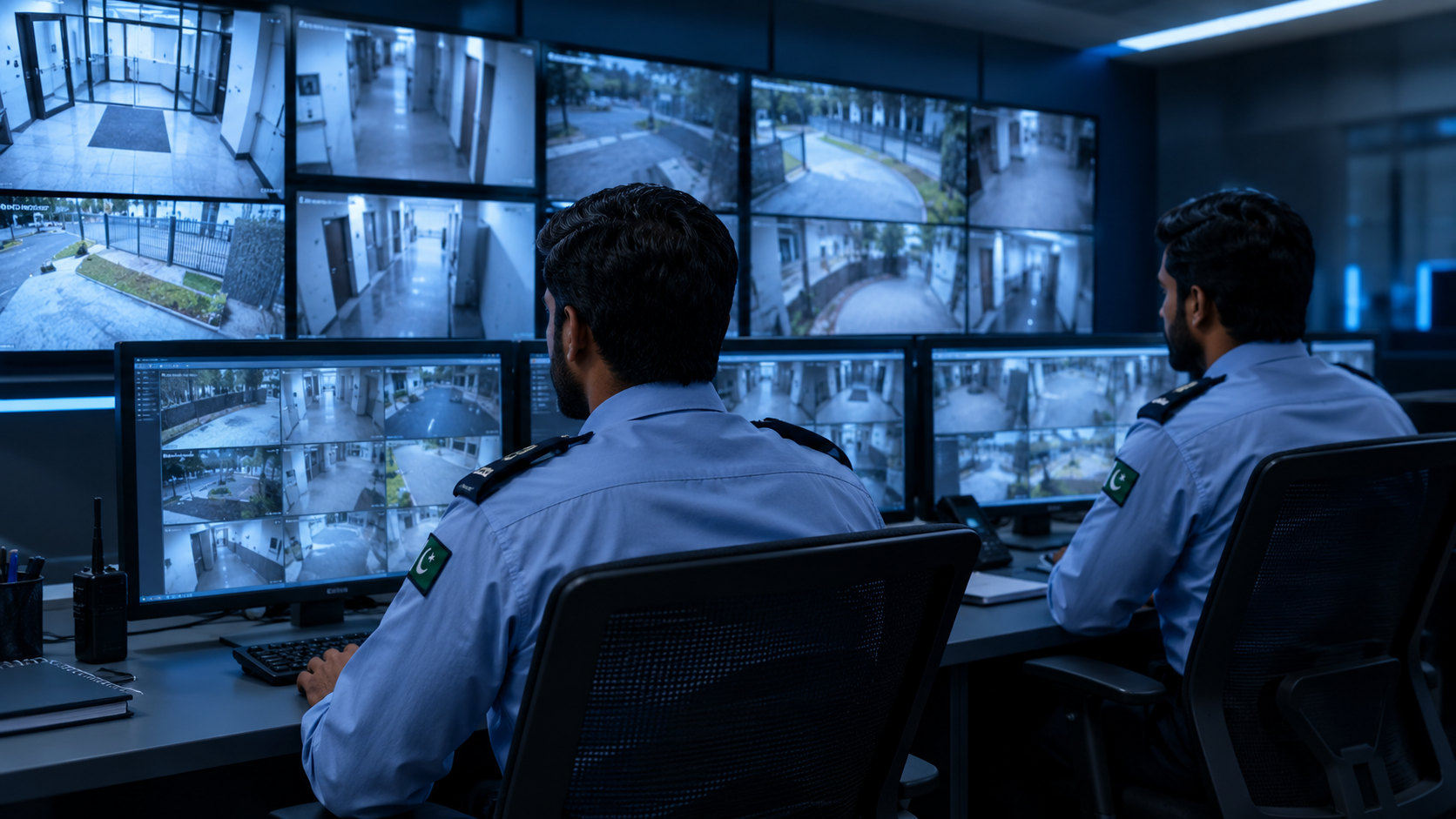
In high-security environments — diplomatic facilities, government institutions, and manufacturing plants — CCTV systems often form part of an integrated security management platform that correlates camera feeds with access control events, alarm activations, and visitor management systems. This integration transforms individual security subsystems into a coherent security management capability.
PECT’s Communication & Security Portfolio
Embassy of Japan, Kabul, Afghanistan (2003)
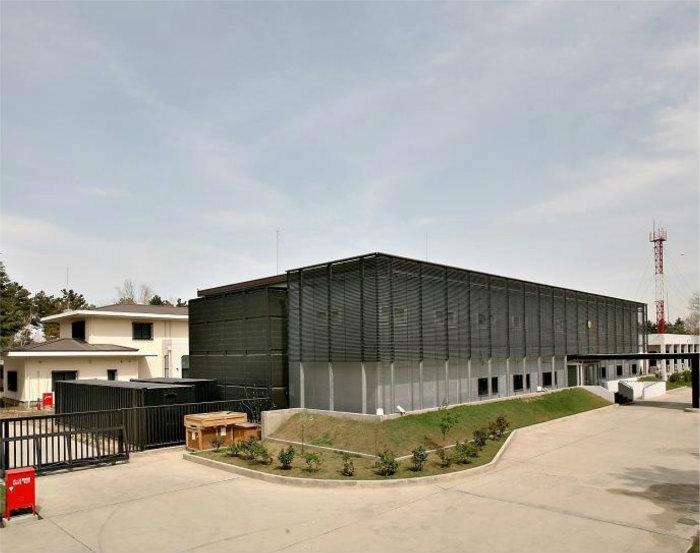
Of all the communication and security installations PECT has delivered, the Embassy of Japan compound in Kabul remains the most demanding — and the most instructive about what these systems must be capable of under true stress conditions.
Post-conflict Kabul in 2003 presented security requirements that went far beyond anything a conventional building project would encounter. The compound required a fully integrated security infrastructure protecting a diplomatic mission in an active threat environment — delivered alongside Tobishima Corporation (main contractor) and Kinden Corporation (Japan’s specialist electrical and security engineering firm), under the funding of Japan’s Ministry of Foreign Affairs.
PECT’s communication and security scope for the compound covered:
Comprehensive CCTV — Internal and external surveillance coverage across the entire compound, engineered for both perimeter monitoring and internal access tracking
Motorised Gate Systems — Vehicle access control with screening capability, integrated with the compound’s security management infrastructure
Public Address System — Emergency and routine communication coverage across the compound’s multiple buildings and open areas
LAN Infrastructure — Communication network cabling supporting data, voice, and security system integration throughout the facility
Fire Alarm System — Integrated life safety detection across all compound structures
All Security Works — Comprehensive security infrastructure meeting Japanese diplomatic facility standards
Delivering this scope in Kabul’s post-conflict environment required solving logistical and security challenges that simply don’t exist on conventional project sites — cross-border equipment procurement, installation under active security conditions, and commissioning to the exacting standards of Japanese diplomatic mission requirements.
GCT Lahore — DAE Mechanical & Architecture Departments (2012-13)
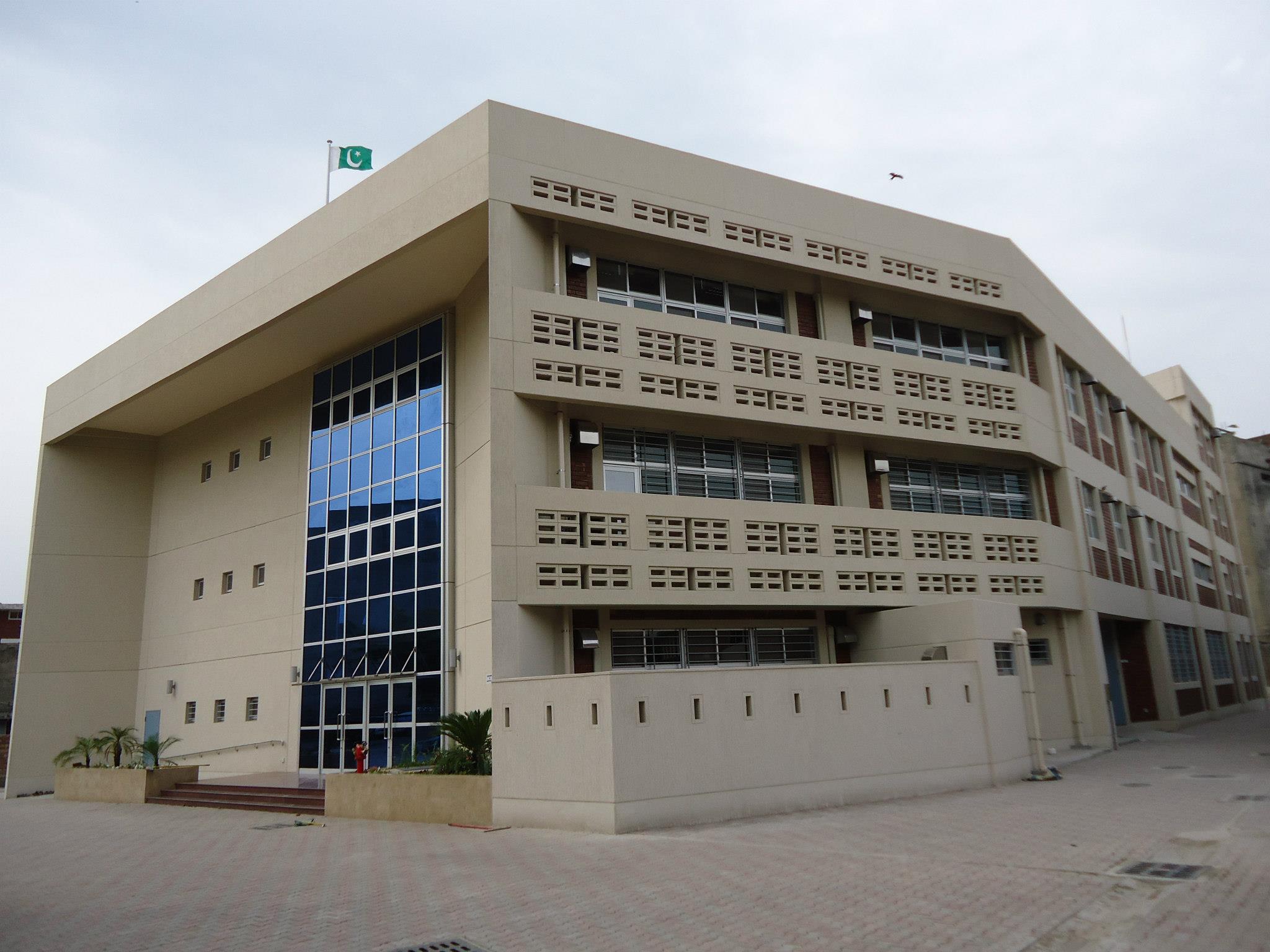
The Strengthening of DAE Mechanical and Architecture Departments at Government College of Technology, Lahore, delivered under Japanese Grant Aid with Sanyo Engineering, demonstrates communication and security systems in an educational campus environment — where the requirements are different in character but equally important.
A technical college campus requires fire alarm coverage across workshops where welding, machining, and other hazardous activities take place — environments with different fire detection requirements from standard office spaces. PA systems must cover both formal teaching spaces and large workshop areas with high ambient noise levels. CCTV must provide campus-wide security coverage supporting both student safety and asset protection.
PECT’s scope at GCT Lahore included fire alarm systems, public address infrastructure, and CCTV coverage across the expanded technical education complex — all commissioned and handed over as part of a comprehensive MEP package supporting Pakistan’s technical education development.
Yamaha Motor Pakistan, Karachi (2014-15)
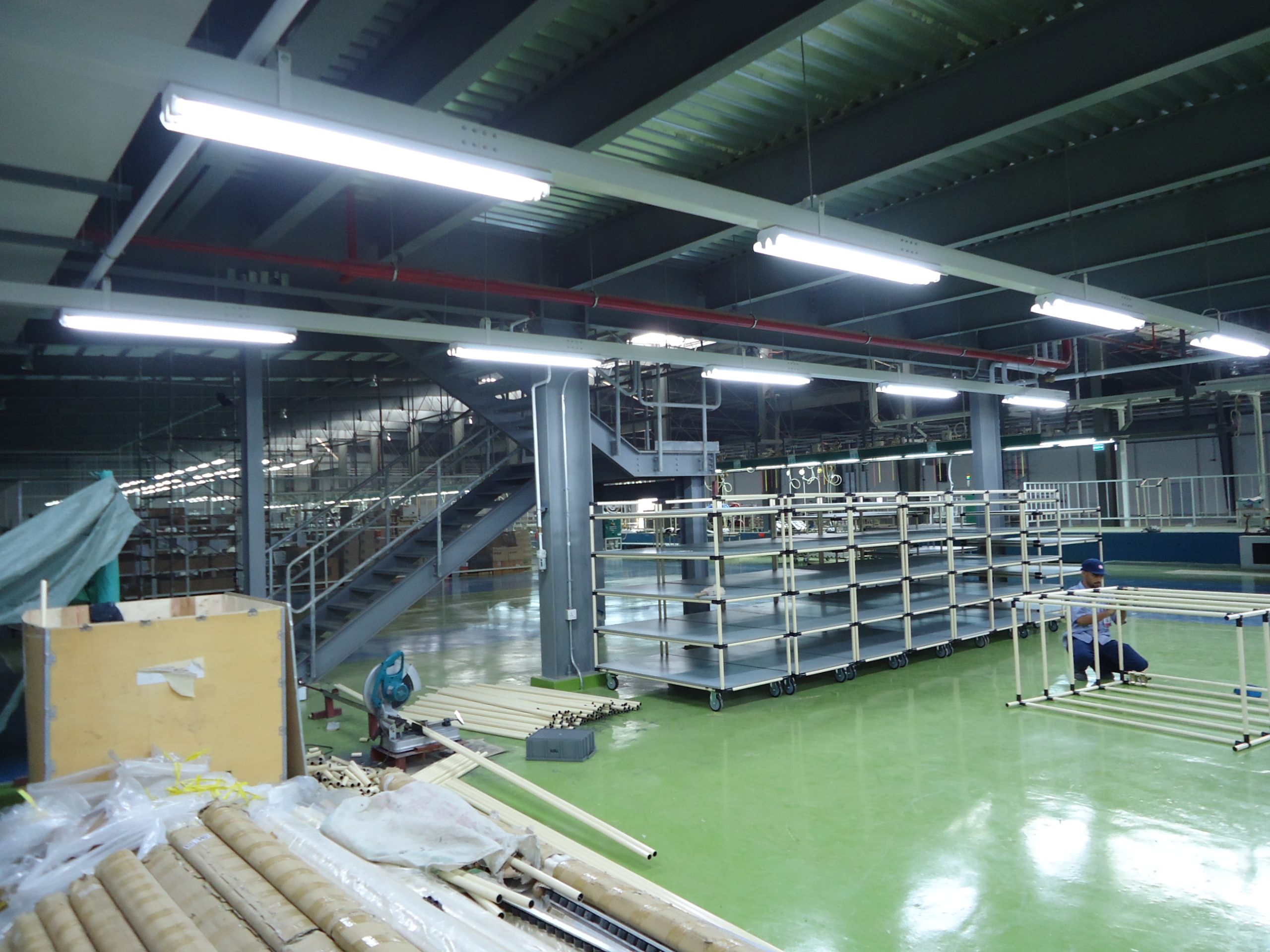
The Yamaha Motor Pakistan manufacturing facility — PECT’s largest single project — illustrates communication and security requirements in a high-value industrial environment. Manufacturing facilities present particular challenges for both fire protection and security infrastructure.
Fire detection in manufacturing environments must account for industrial processes that generate heat, dust, and fumes — requiring careful detector selection and placement to avoid false activations while ensuring genuine fire events are detected promptly. PA systems in manufacturing areas must overcome high ambient noise from production machinery. CCTV must cover both the production floor and the facility perimeter, with particular attention to asset protection in a high-value manufacturing environment.
PECT delivered fire alarm systems, public address infrastructure, CCTV surveillance, and emergency lighting as part of the comprehensive MEP installation for Yamaha’s state-of-the-art motorcycle manufacturing facility — all to the rigorous quality standards that Yamaha’s Japanese manufacturing management framework required. Delivered with Sanyo Engineering.
Integration: Where Individual Systems Become a Security Platform
The most significant development in building communication and security systems over recent decades has been the move toward integration — individual systems that share infrastructure, communicate with each other, and present a unified interface to facility management.
A fire alarm that automatically triggers a PA announcement and unlocks emergency exit doors. A CCTV system that displays camera feeds for access events as they occur. An access control system that denies entry to unauthorised personnel while automatically notifying security management. These integrations transform a collection of individual systems into a coherent security and safety management platform.
Achieving this integration requires that each individual system is installed with integration in mind from the outset — correct interface specifications, compatible protocols, and structured cabling infrastructure that supports the connections the integrated platform depends on. Retrofitting integration capability onto poorly planned individual systems is significantly more expensive and less effective than designing for integration at the installation stage.
Learn more about PECT’s full electrical engineering capabilities at our Capabilities page. For facilities requiring integrated MEP solutions — including backup power, earthing and lightning protection, and building management systems — explore PECT’s complete service range.
Commissioning: Testing What Matters Before It Matters
Communication and security systems share an important characteristic with backup power and fire protection systems: they are designed to perform in exceptional circumstances — emergencies, security incidents, power failures. This means their commissioning cannot simply verify that components are installed. It must verify that the entire system performs correctly under the conditions it was designed for.
Fire alarm commissioning requires activating every detector and verifying correct panel response, alarm zone behaviour, and integration with connected systems. CCTV commissioning requires verifying field of view, image quality, recording function, and remote access at every camera position. PA system commissioning requires acoustic testing at every speaker location to verify intelligibility under realistic ambient noise conditions.
This level of commissioning takes time and requires systematic documentation. It is also the only way to be confident that the systems will perform correctly when they are genuinely needed.
PECT’s commissioning process for communication and security systems follows manufacturer specifications and international standards, with test records and system documentation handed over as part of the project completion package.
The Systems Nobody Sees — Until They Need Them
Communication and security systems share their most important characteristic with earthing systems and backup power: they perform their most critical function in moments that are, by definition, exceptional. The fire that requires evacuation. The security incident that requires CCTV review. The power failure that requires emergency lighting to guide people to safety.
For this reason, the quality of installation and commissioning — not just the specification of the equipment — is what determines whether these systems deliver when they are actually needed. A well-specified CCTV system with poorly managed cable runs that cause interference. A correctly positioned fire detector on an incorrectly configured zone. A PA speaker that covers a corridor at comfortable volume but cannot be heard over evacuation noise. These are the failure modes that commissioning is designed to prevent.
Across three decades of installations — in diplomatic compounds, manufacturing facilities, educational institutions, and healthcare environments — PECT has delivered communication and security systems that work when they matter most. Because in life safety and security engineering, there is no acceptable alternative.