
- PECT Digital
- 0 Comments
- 924 Views
Pakistan is one of the world’s most disaster-prone countries. Monsoon flooding displaces millions annually. Cyclones from the Arabian Sea threaten Karachi and Sindh’s coastal communities. Flash floods triggered by intense rainfall devastate communities from Balochistan to Khyber Pakhtunkhwa. Hailstorms and extreme weather events damage crops across the agricultural heartland.
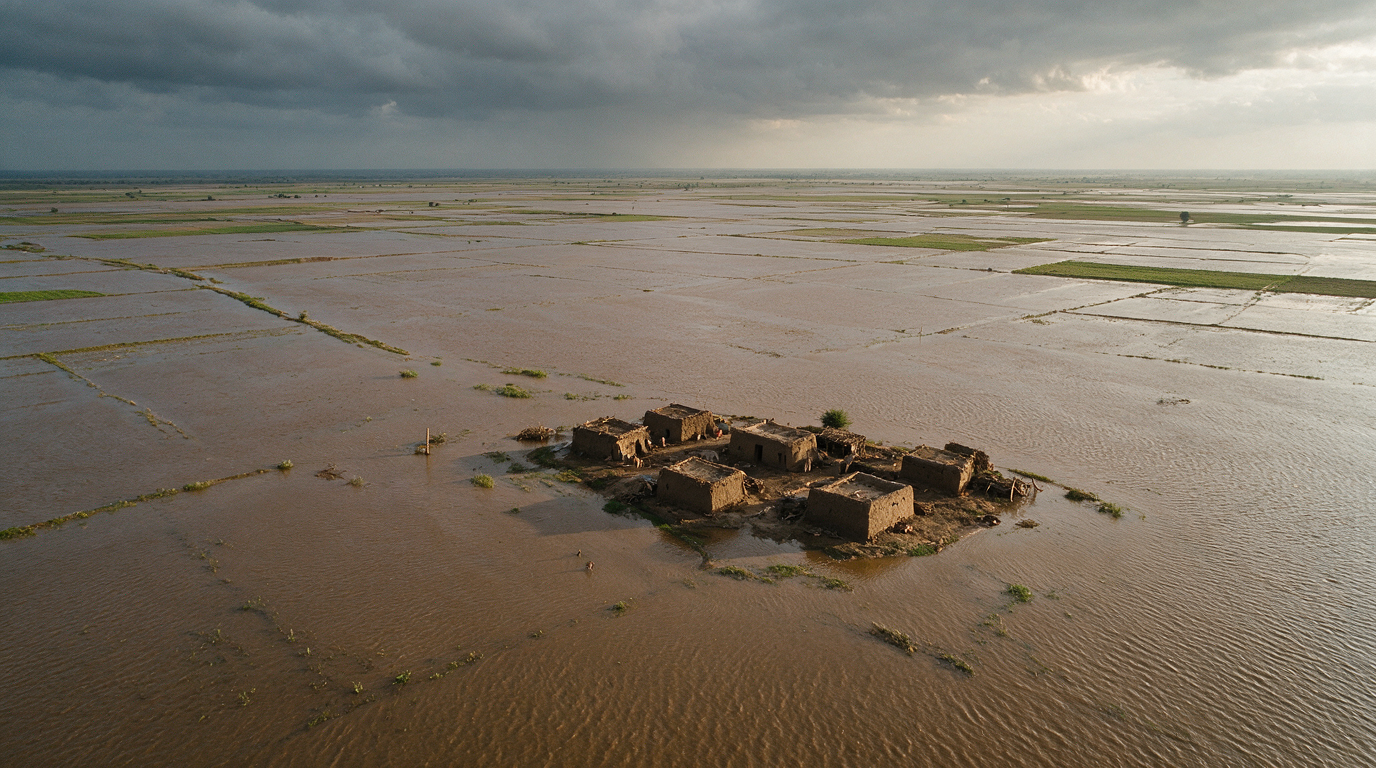
According to the National Disaster Management Authority (NDMA), Pakistan consistently ranks among the countries most affected by climate-related disasters — with the catastrophic 2022 floods alone submerging one-third of the country and affecting over 33 million people.
At the heart of Pakistan’s response to this vulnerability is the ability to see weather coming — to detect the rain clouds, storm cells, and atmospheric conditions that produce dangerous weather events, and to issue warnings that give communities, authorities, and emergency services time to prepare.
That capability depends on weather surveillance radar.
Pakistan’s Weather Radar Network: A Japanese Investment in Pakistani Lives
Recognising the critical gap in Pakistan’s meteorological infrastructure, the Government of Japan — through the Japan International Cooperation Agency (JICA) — funded a transformational programme to establish a modern weather surveillance radar network across Pakistan.
The programme has funded radar installations at four strategic locations:
- Islamabad — covering northern Pakistan and the approaches from the Himalayan region
- Karachi — covering Pakistan’s southern coastline and Sindh province
- Multan — covering Punjab’s agricultural heartland
- Sukkur — covering interior Sindh and Balochistan’s eastern regions
Together, this network of four state-of-the-art radar systems will cover more than 80% of Pakistan’s geographic area — providing continuous, round-the-clock weather monitoring capability that Pakistan’s Pakistan Meteorological Department (PMD) uses for short-term weather forecasting, storm monitoring, flood risk assessment, and aviation weather services.
The total investment by the Japanese government across this programme exceeds USD 74 million — one of the most significant contributions to Pakistan’s disaster preparedness infrastructure in the country’s history.
How Weather Surveillance Radar Works

Weather surveillance radar — specifically the Doppler radar systems installed under this programme — operates on a principle that is elegant in its simplicity but extraordinarily sophisticated in its execution.
The radar transmits pulses of microwave energy into the atmosphere. When those pulses encounter precipitation — rain, hail, snow, or ice crystals — some of the energy is reflected back to the radar receiver. By measuring the strength of the returning signal, the radar determines how much precipitation is present. By measuring the time it takes for the signal to return, it calculates where the precipitation is located. And by measuring the frequency shift of the returning signal (the Doppler effect), it determines how fast and in which direction the precipitation — and the wind carrying it — is moving.
The result is a continuous, real-time picture of precipitation across the radar’s coverage area — updated every few minutes, available to meteorologists around the clock.
S-Band and X-Band radars — the types deployed in Pakistan’s network — operate at different frequencies suited to different detection tasks. S-Band radars like the Karachi installation provide longer-range detection suitable for monitoring large-scale weather systems such as monsoon rain bands and tropical cyclones. Their longer wavelength allows them to penetrate heavy precipitation without the signal attenuation that affects shorter-wavelength systems, making them particularly suited to Pakistan’s most dangerous weather events.
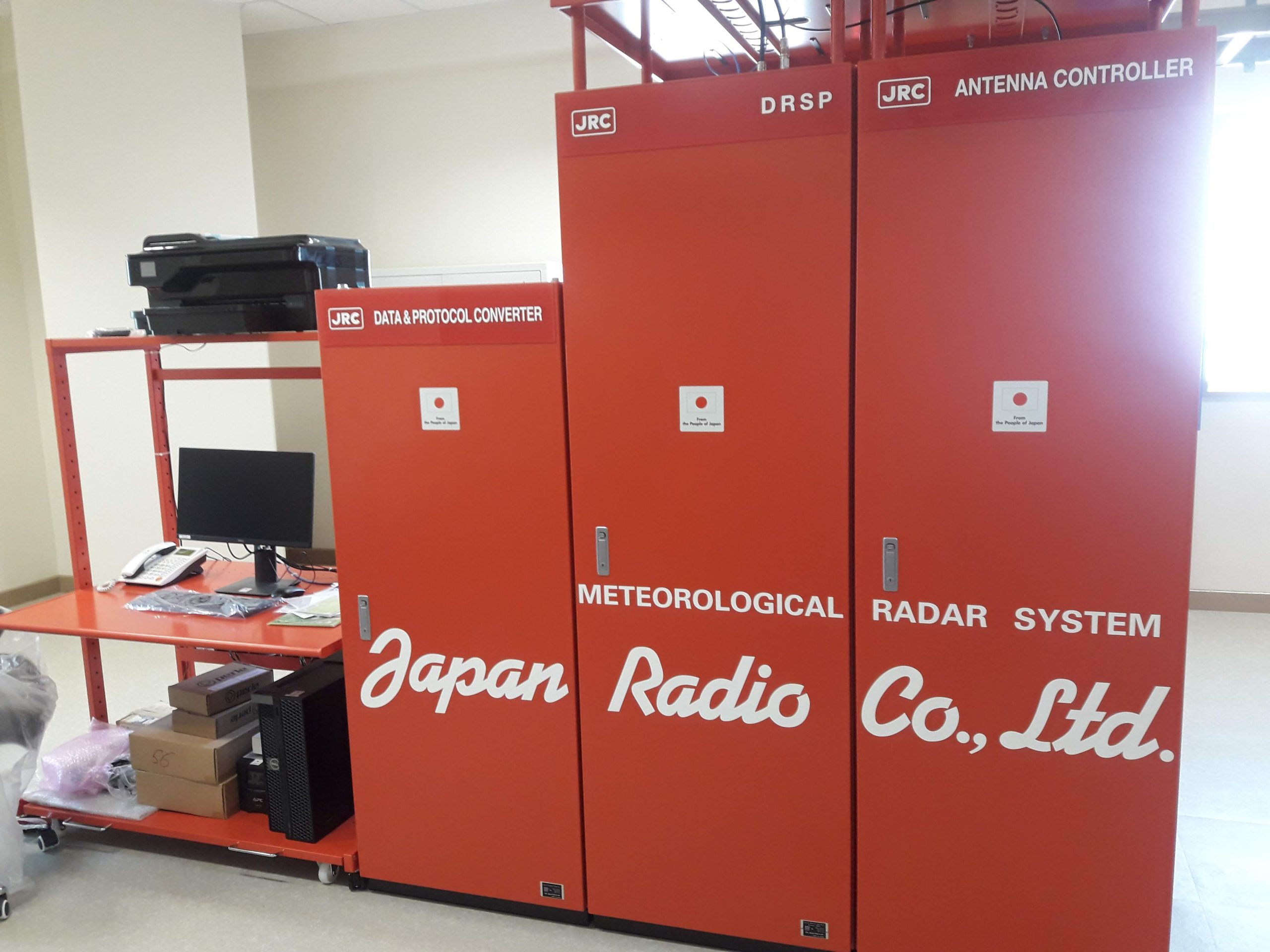
Dual polarisation technology — a feature of modern weather radar systems — transmits pulses in both horizontal and vertical orientations simultaneously. By comparing the returning signals, meteorologists can distinguish rain from hail, identify the melting layer where snow turns to rain, and estimate rainfall rates with far greater accuracy than single-polarisation systems allow.
The output of all this technology is what appears on PMD’s weather maps — the colour-coded displays of precipitation intensity that form the basis of weather warnings and forecasts reaching millions of Pakistanis.
The Karachi Weather Surveillance Radar: Project Overview
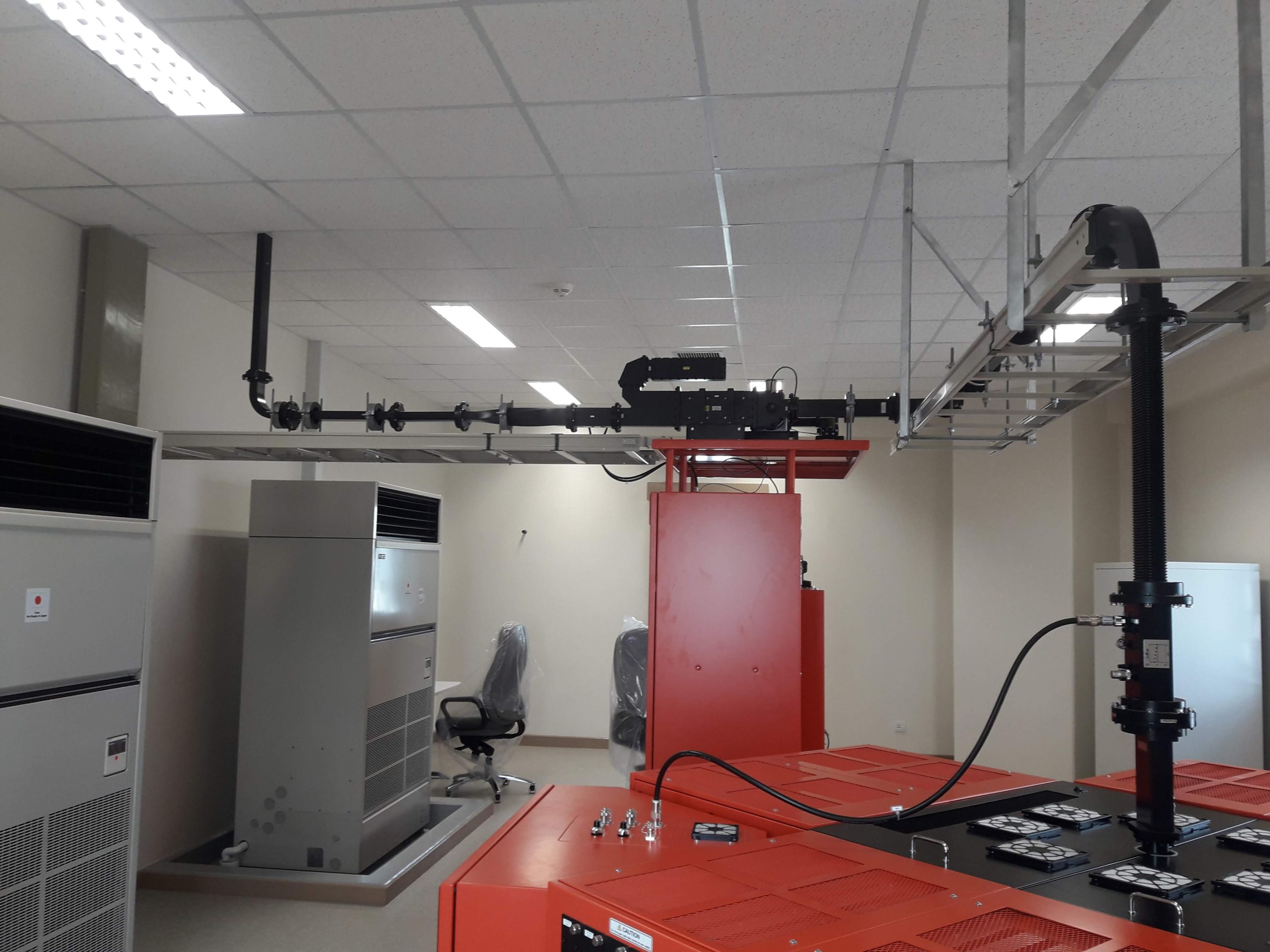
The Karachi weather surveillance radar installation represents the southern anchor of Pakistan’s national radar network — covering the country’s most economically significant city, its primary port, and the entire southern coastal region for a radius of 450 kilometres.
Project highlights:
- Funding: Japanese government grant assistance — JPY 1.95 billion (approximately USD 17.71 million / PKR 4.92 billion at current exchange rates)
- PECT’s MEP Subcontract: PKR 50 million — covering complete electrical, mechanical, plumbing, and HVAC works for the radar facility
- Operated by: Pakistan Meteorological Department (PMD)
- Coverage: 450 km radius covering southern Pakistan’s coastline, Sindh province, and maritime approaches
- Operational since: April 2021
- Formal inauguration: March 2022, attended by the Consul General of Japan in Karachi, the Chief Representative of JICA Pakistan, Pakistan’s Federal Minister for Aviation, and the Director General of PMD
- Significance: Part of a 30-year Japanese commitment to Karachi’s meteorological infrastructure — the Consul General of Japan noted at the inauguration that Japan had supported a previous Karachi radar project thirty years earlier
To put the scale in perspective: PECT’s PKR 50 million MEP subcontract formed part of a PKR 4.92 billion national infrastructure investment — a small but essential component of the chain that makes the entire radar system operationally possible.
The inauguration of the Karachi radar marked a significant moment in Japan-Pakistan cooperation — with senior Japanese diplomatic and development officials present alongside Pakistan’s federal government — reflecting the importance both governments placed on this contribution to Pakistan’s disaster resilience.
Why the Karachi Radar Matters
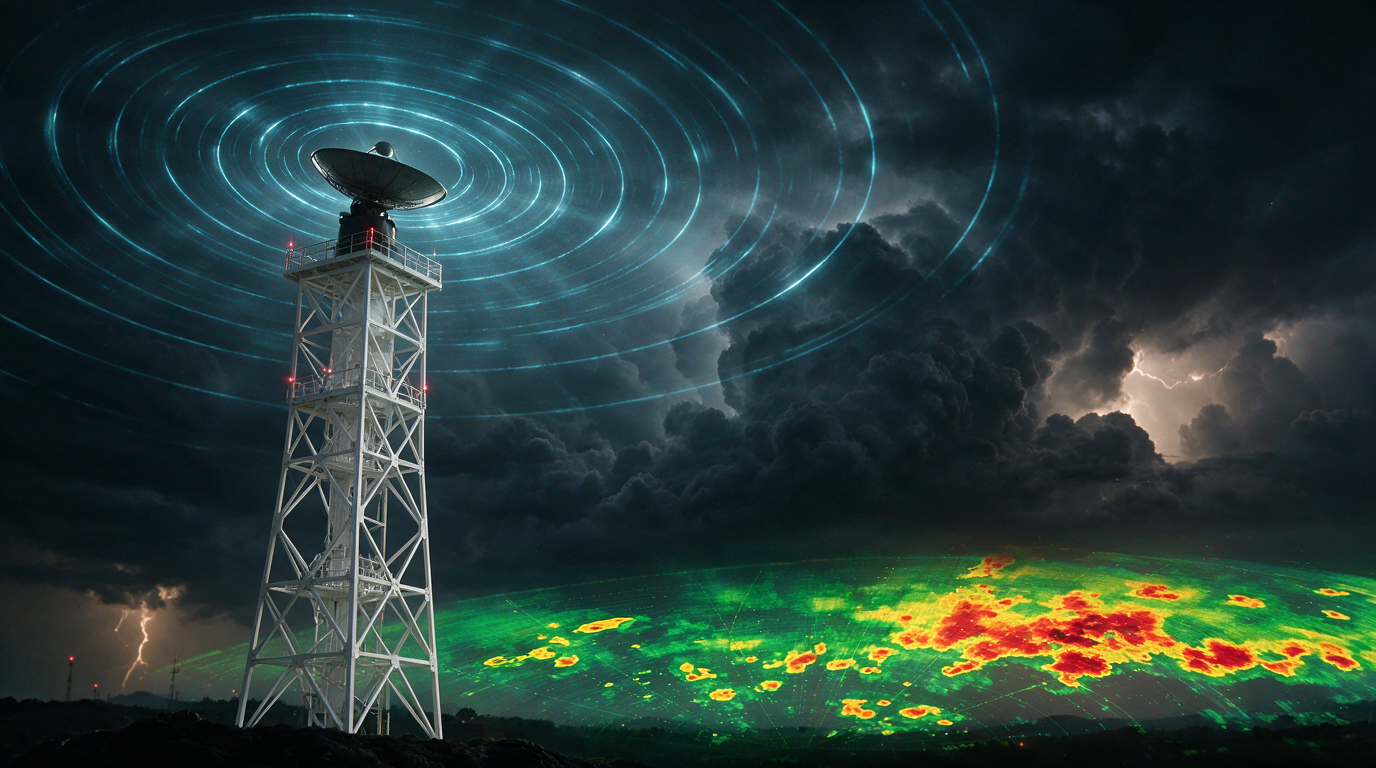
Pakistan’s southern coastline faces a specific set of weather threats that make the Karachi radar’s 450-kilometre coverage particularly important.
Tropical cyclones from the Arabian Sea threaten Karachi and the Makran coast periodically, with Cyclone Biparjoy in 2023 serving as a recent reminder of the destructive potential of these systems. Early detection of cyclone development and accurate tracking of storm tracks provides the warning time needed for coastal evacuations and emergency preparations that save lives.
Pre-monsoon and monsoon rain systems approaching from the Arabian Sea can produce intense rainfall over Karachi — a city whose drainage infrastructure has historically struggled with extreme precipitation events. The urban flooding that follows intense rainfall causes significant damage and loss of life. Accurate, timely rainfall warnings allow city authorities to pre-position resources and issue public advisories.
Aviation weather services for Karachi’s Jinnah International Airport — Pakistan’s busiest international gateway — depend on accurate meteorological data. Thunderstorm detection, wind shear identification, and precipitation monitoring all contribute to the safety and efficiency of the hundreds of flights that use Karachi’s airspace daily.
Agricultural applications across Sindh — Pakistan’s second most agriculturally significant province — benefit from improved rainfall forecasting that helps farmers make irrigation, harvesting, and crop management decisions.
PECT’s Role: The MEP Foundation That Makes Radar Operations Possible
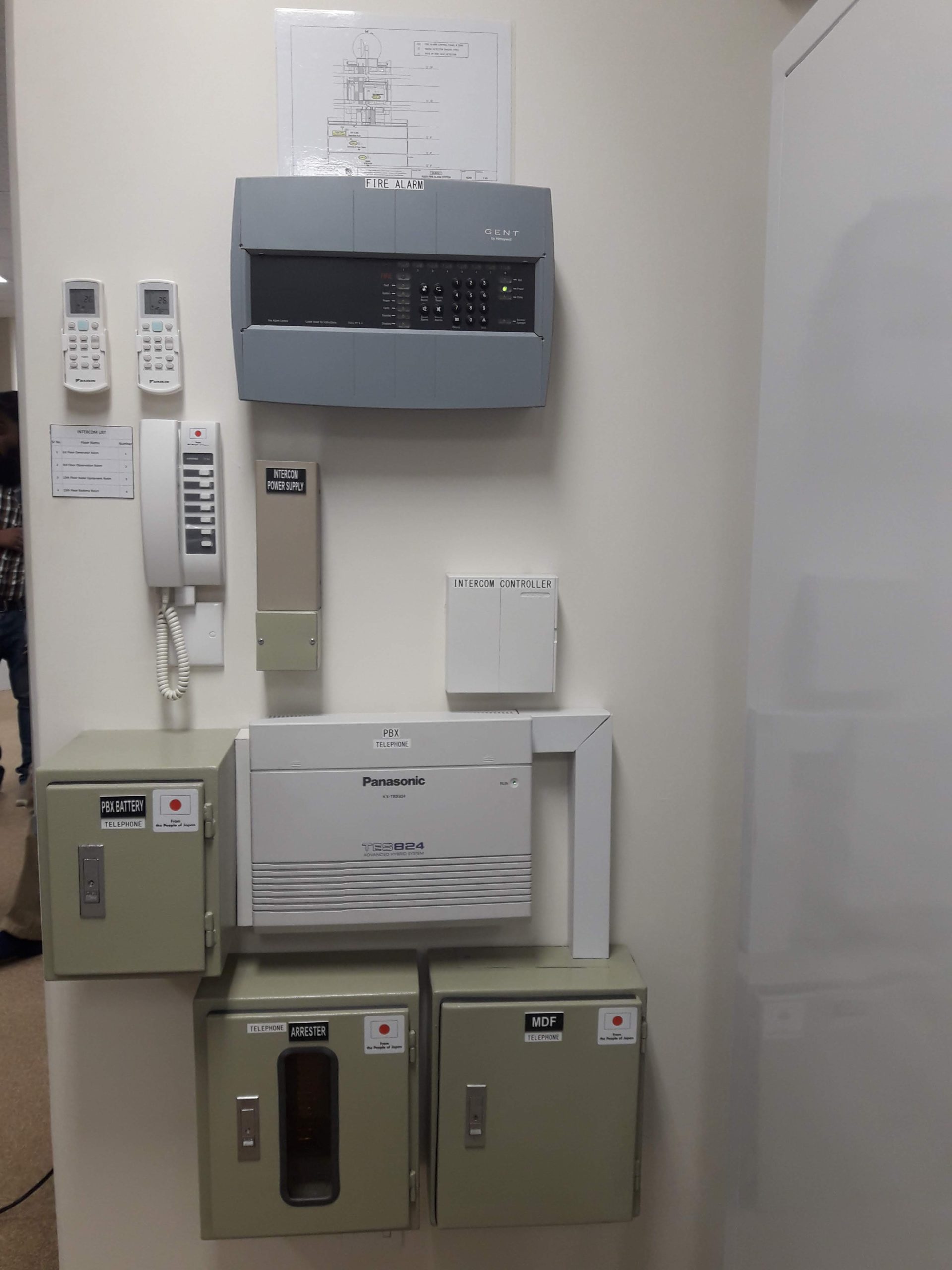
Advanced radar technology requires sophisticated facility infrastructure to operate from. A weather surveillance radar facility is not simply a tower with an antenna — it is a fully functioning technical facility requiring continuous, reliable power, clean water, sanitation, climate-controlled equipment spaces, and building services that perform without interruption, year-round, in Karachi’s demanding coastal environment.
These are not incidental requirements. A power failure at the radar facility means loss of monitoring coverage precisely when a weather emergency may be developing. HVAC failure in equipment rooms risks damage to sensitive electronics that are irreplaceable without significant lead time. Water system reliability supports the operational needs of the technical staff who manage the facility around the clock.
PECT Private Limited delivered the complete MEP works for the Karachi Weather Surveillance Radar facility — a PKR 50 million installation completed in 2018-19, prior to the radar becoming operational in 2021.
PECT’s scope covered the full MEP package:
⚡ Electrical Systems — Complete power distribution infrastructure for the radar facility, ensuring reliable electrical supply to both operational and support systems. Electrical works supporting the facility’s continuous, round-the-clock operations.
💧 Mechanical & Plumbing — Comprehensive water supply infrastructure engineered for facility self-sufficiency in a coastal operational environment:
- FRP tank assembly providing reliable on-site water storage
- Solar water geyser installation for sustainable hot water supply
- Complete hot and cold water distribution systems
- Sewage and drainage piping throughout the facility
- Full sanitary fixture installation with testing and commissioning
🌡️ HVAC & Mechanical Services — Climate control and ventilation for the facility’s technical and operational spaces, managing Karachi’s coastal heat and humidity to protect both equipment and personnel.
Every system was installed, tested, and commissioned to the standards that a nationally significant operational facility requires — with documentation ensuring that the MEP infrastructure could be maintained and operated effectively across the facility’s long operational life.
Engineering for National Impact
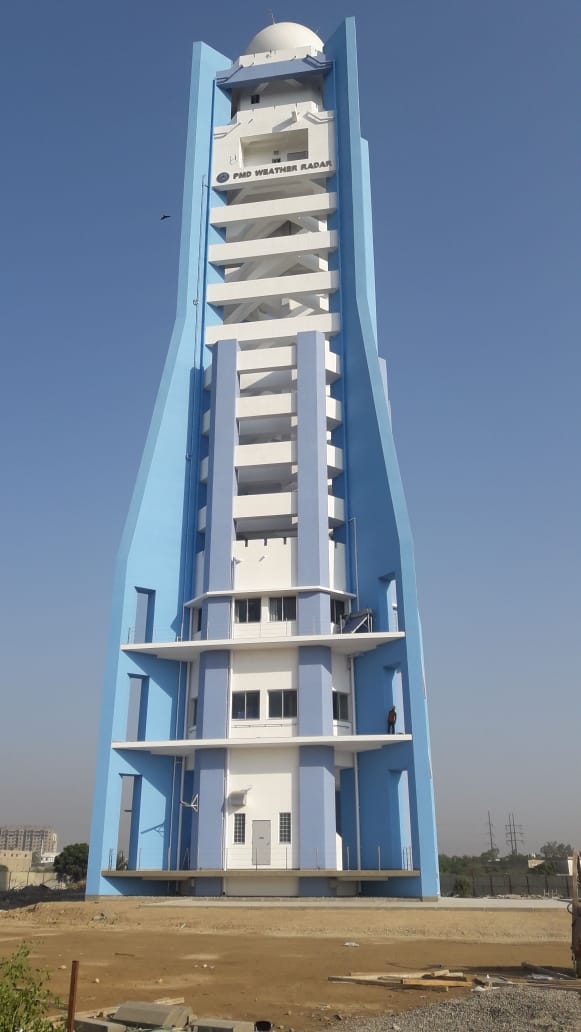
PECT’s involvement in the Karachi Weather Surveillance Radar facility reflects a pattern that runs throughout our project history: the provision of MEP infrastructure for facilities whose importance extends well beyond their physical footprint.
A hospital’s electrical system, plumbing, and HVAC exist to enable clinical care. A water treatment plant’s MEP systems exist to enable safe water supply for hundreds of thousands of residents. A weather radar facility’s MEP infrastructure exists to enable the meteorological monitoring that protects millions of people from natural disasters.
In each case, the MEP engineering is not the headline — but without it, the headline facility cannot function.
This is the nature of MEP engineering at its most meaningful: invisible in operation, essential in consequence. The Karachi weather radar has been operational since April 2021, providing continuous weather monitoring coverage for Pakistan’s southern region. Every forecast PMD issues for Karachi and Sindh, every storm warning, every monsoon advisory — each depends on the facility continuing to operate.
And the facility continues to operate, in part, because the electrical systems, water supply, and mechanical services that PECT installed in 2018-19 are doing exactly what they were designed to do.
Learn more about PECT’s full engineering capabilities at our Capabilities page. For facilities requiring comprehensive MEP solutions across electrical, mechanical, and HVAC disciplines, contact PECT to discuss your project requirements.
Pakistan’s Meteorological Future
The completion of Pakistan’s national radar network — with installations at Islamabad, Karachi, Multan, and Sukkur covering more than 80% of the country — represents a transformational improvement in the nation’s weather monitoring capability.
For the Pakistan Meteorological Department, this network provides the observational foundation for improved forecast accuracy, longer lead times for severe weather warnings, and better-integrated early warning systems connected to NDMA’s disaster response infrastructure.
For Pakistan’s 220 million people — particularly the millions living in flood-prone, cyclone-exposed, and monsoon-affected areas — it represents a meaningful improvement in the warning systems that can make the difference between preparation and catastrophe.

Japan’s sustained investment in this infrastructure — across four radar installations, thirty years of meteorological cooperation, and billions in grant assistance — reflects a partnership between two nations that extends well beyond trade and diplomacy into the practical business of protecting Pakistani lives.
PECT is proud to have contributed to that partnership — one MEP installation at a time.
PECT Private Limited is an ISO 9001 certified MEP contractor with over 34 years of experience delivering electrical, mechanical, and HVAC systems across Pakistan’s most demanding project environments. Contact us to discuss your facility’s engineering requirements.