- PECT Digital
- 0 Comments
- 14671 Views
Pakistan is not a forgiving environment for buildings. Summers routinely bring temperatures above 45°C across the plains, Karachi’s coastal humidity adds a layer of thermal stress that simple cooling cannot address, and facilities from Islamabad to Sindh face months of relentless heat loading that places severe demand on mechanical systems.
In this environment, HVAC engineering is not a finishing touch. It is a critical building system — one that determines whether a hospital can maintain sterile conditions, whether a factory can sustain production quality, and whether a laboratory, diplomatic facility, or educational institution can simply continue functioning normally.
At PECT Private Limited, HVAC has been a core engineering discipline since our founding in 1991. Over three decades, we have delivered climate control systems across healthcare, institutional, and diplomatic sectors throughout Pakistan — many of them under Japanese Grant Aid, in partnership with Japan’s leading engineering and construction firms. This article explores why HVAC demands serious engineering attention in the Pakistani context, and what separates a properly executed system from one that merely exists.
The Pakistan HVAC Challenge
Most countries have demanding climates. Pakistan’s is particularly so because the demands are diverse. The north faces freezing winters requiring heating and humidity control. The south faces prolonged intense heat combined with coastal humidity. Interior cities experience dry, extreme heat that places maximum stress on cooling capacity.
A building system designed around average conditions will underperform in Pakistan’s worst months. Hospitals that lose reliable climate control face infection control failures. Manufacturing facilities that cannot maintain stable temperature and humidity produce off-specification products. Laboratories see compromised results. Server rooms can experience equipment failure within hours.
The engineering imperative is therefore to design and install systems that perform at peak demand — sized and commissioned for the worst conditions, not the most comfortable ones.
HVAC in Healthcare: The Highest Standard
Of all building environments, healthcare facilities set the most demanding requirements for climate control. The stakes of system failure are not operational inconvenience — they are patient safety.
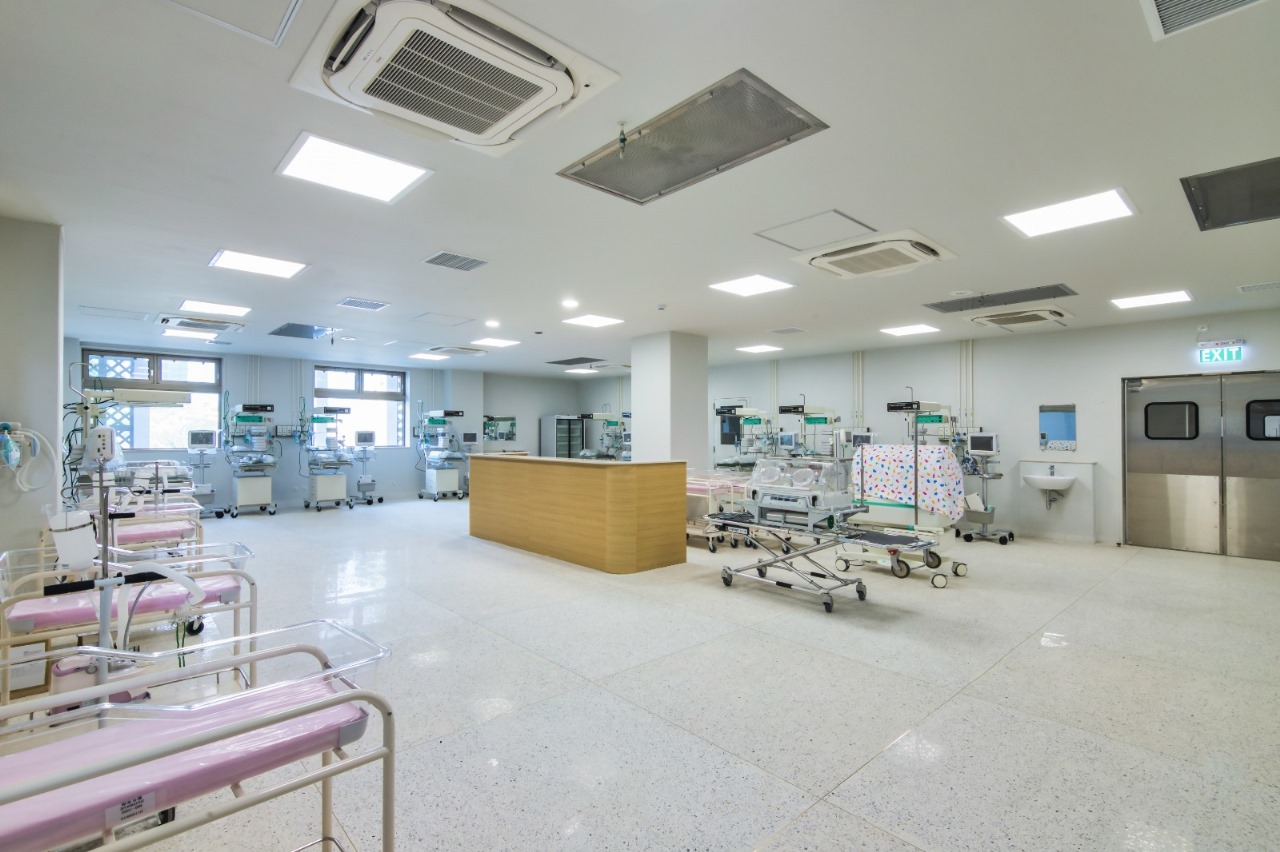
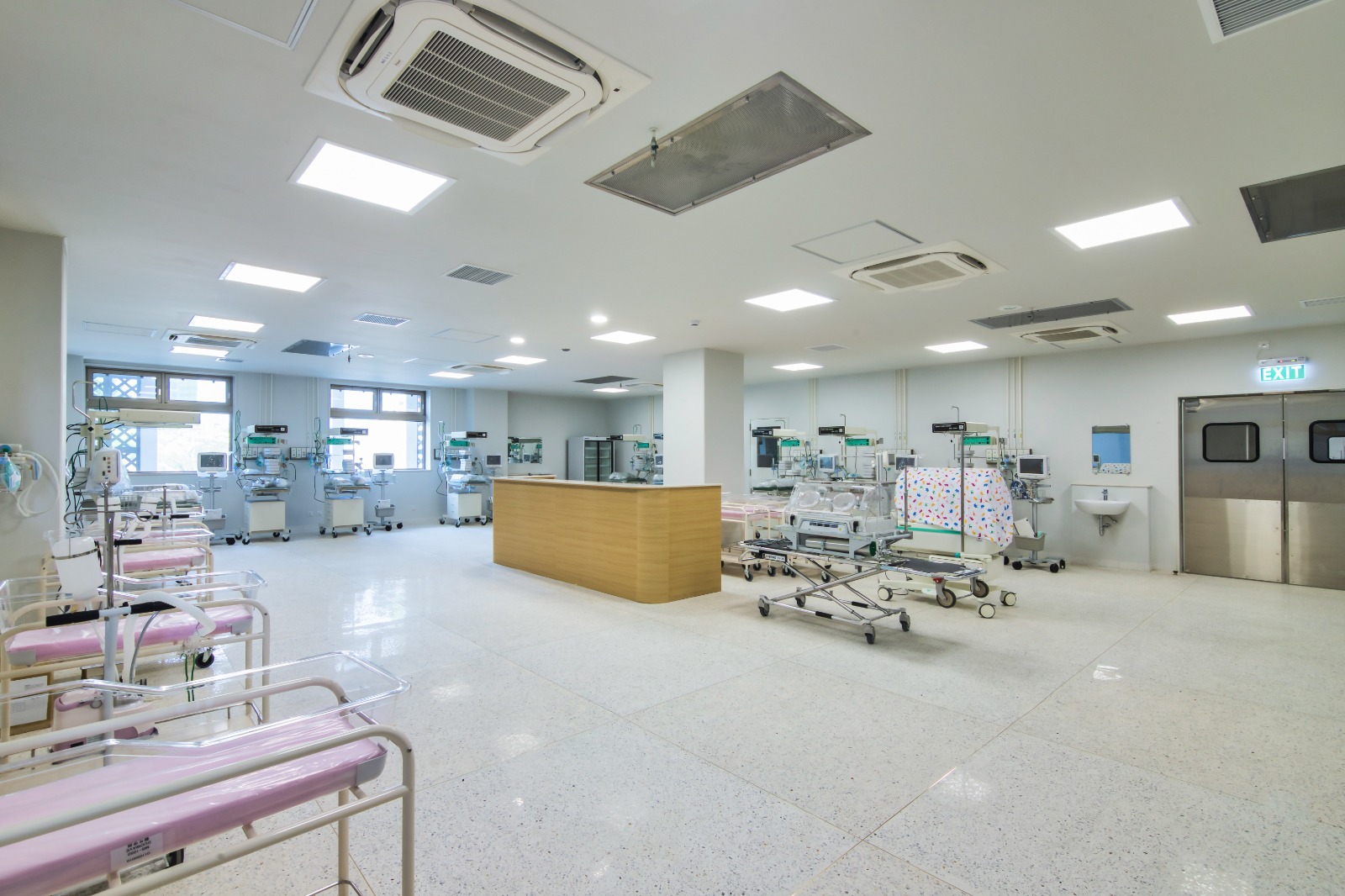
Operating theaters require precisely controlled air supply with exacting temperature, humidity, and pressure management to prevent contamination during surgical procedures. Critical care units, neonatal wards, and isolation rooms each have their own specific air change rates, pressure relationships, and filtration requirements. Neonatal environments must maintain precise thermal stability for premature infants who cannot regulate their own body temperature. Infection isolation rooms must maintain negative pressure to contain airborne pathogens and protect the wider facility.
PECT has delivered HVAC systems for two of Pakistan’s most significant healthcare projects under Japanese Grant Aid:
PIMS Children Hospital ICU Extension, Islamabad (2021–2023) Working with Sanyo Engineering on this major expansion of PIMS’s paediatric intensive care capacity, PECT installed complete HVAC systems across the ICU extension — including air handling units, ceiling cassette and split air conditioning systems, exhaust ventilation, and full duct distribution covering the facility. This project required meeting the stringent life-safety requirements expected of a national referral facility, with installation carried out while the broader hospital remained operational.
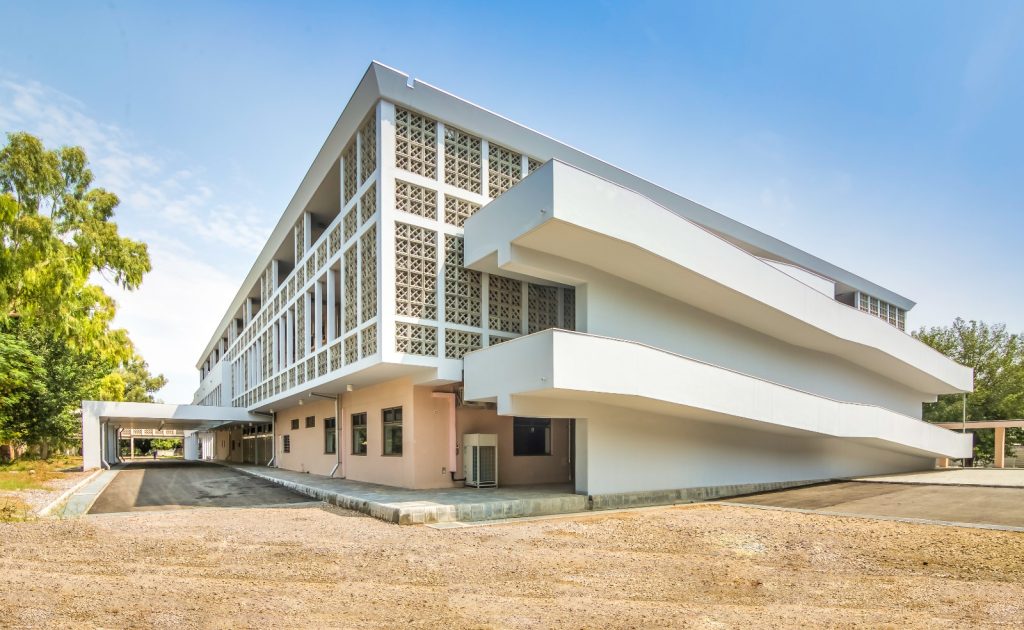
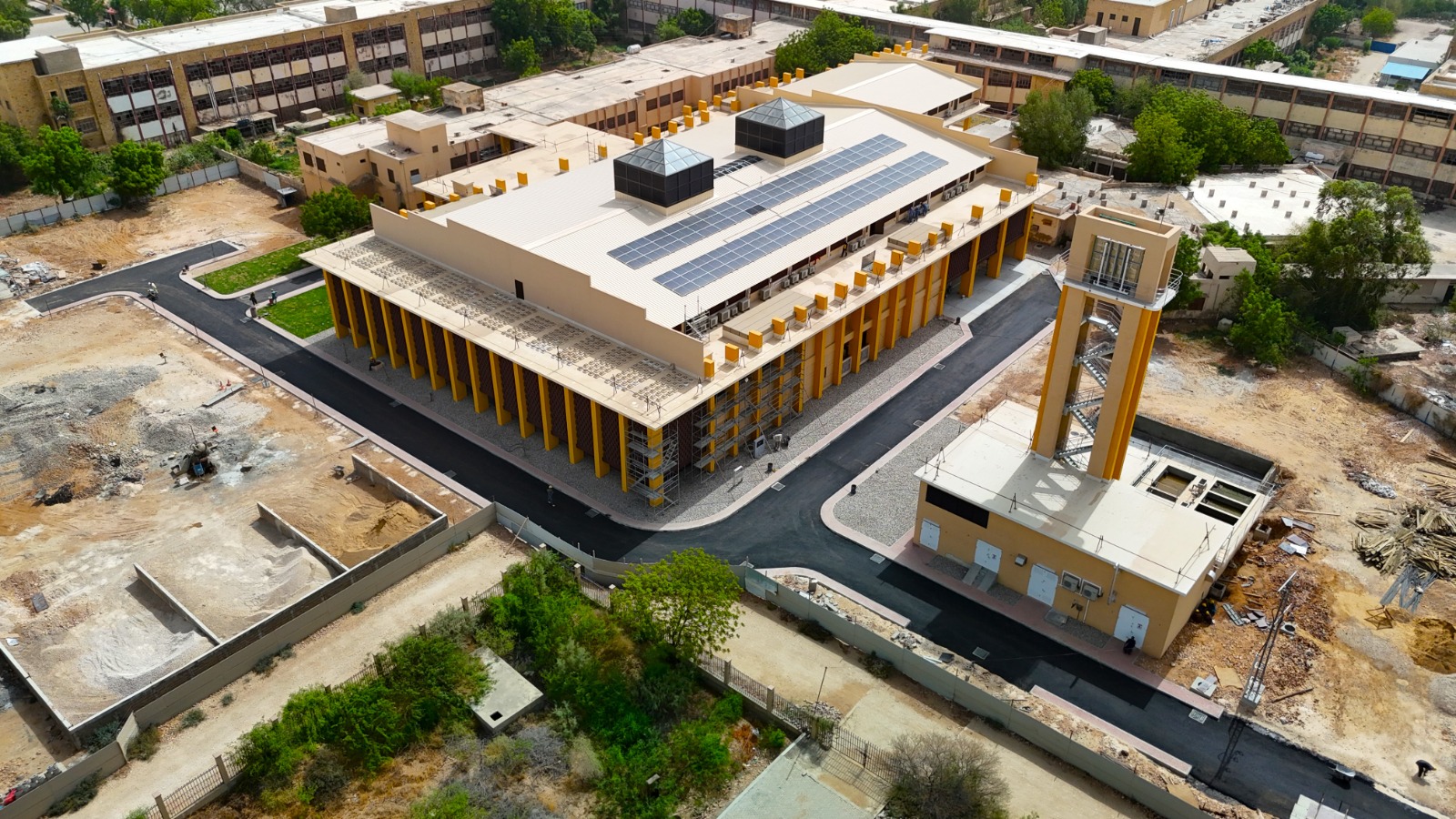
LUMHS Child Health Institute Extension, Jamshoro (Completed 2025) In partnership with Tobishima Corporation, PECT delivered comprehensive HVAC installation across the extended paediatric facility at Liaquat University of Medical & Health Sciences in Jamshoro. The scope included Daikin air conditioning systems throughout the building, supply and exhaust duct fan systems from leading Japanese manufacturers, and complete spiral and rectangular ductwork distribution. Sindh’s extreme summer climate made reliable climate control particularly critical for patient care, medication storage, and infection prevention in this rural healthcare facility.
These installations reflect what healthcare HVAC actually demands: not comfort cooling, but precisely controlled, reliably redundant systems whose failure is simply not an acceptable outcome.
HVAC for Diplomatic Facilities: Precision and Discretion
Diplomatic and government facilities carry their own specific requirements — a combination of technical precision, aesthetic standards, and operational security that leaves little margin for error.
Consulate General of Japan, Karachi PECT’s relationship with the Consulate General of Japan in Karachi spans multiple phases of HVAC works delivered with Tobishima Corporation. This included VRV system installation and, in a subsequent major engagement, comprehensive air conditioning works with stainless steel ducting throughout the consulate premises. Japanese diplomatic facilities demand a level of finish and reliability consistent with Japan’s own engineering standards — a benchmark that has defined PECT’s work across its three-decade relationship with Japanese contractors and institutions in Pakistan.
HVAC for Educational and Institutional Facilities
Educational facilities present their own climate control demands — large occupied spaces that must remain comfortable across long daily operating hours, often in buildings with significant solar heat gain.
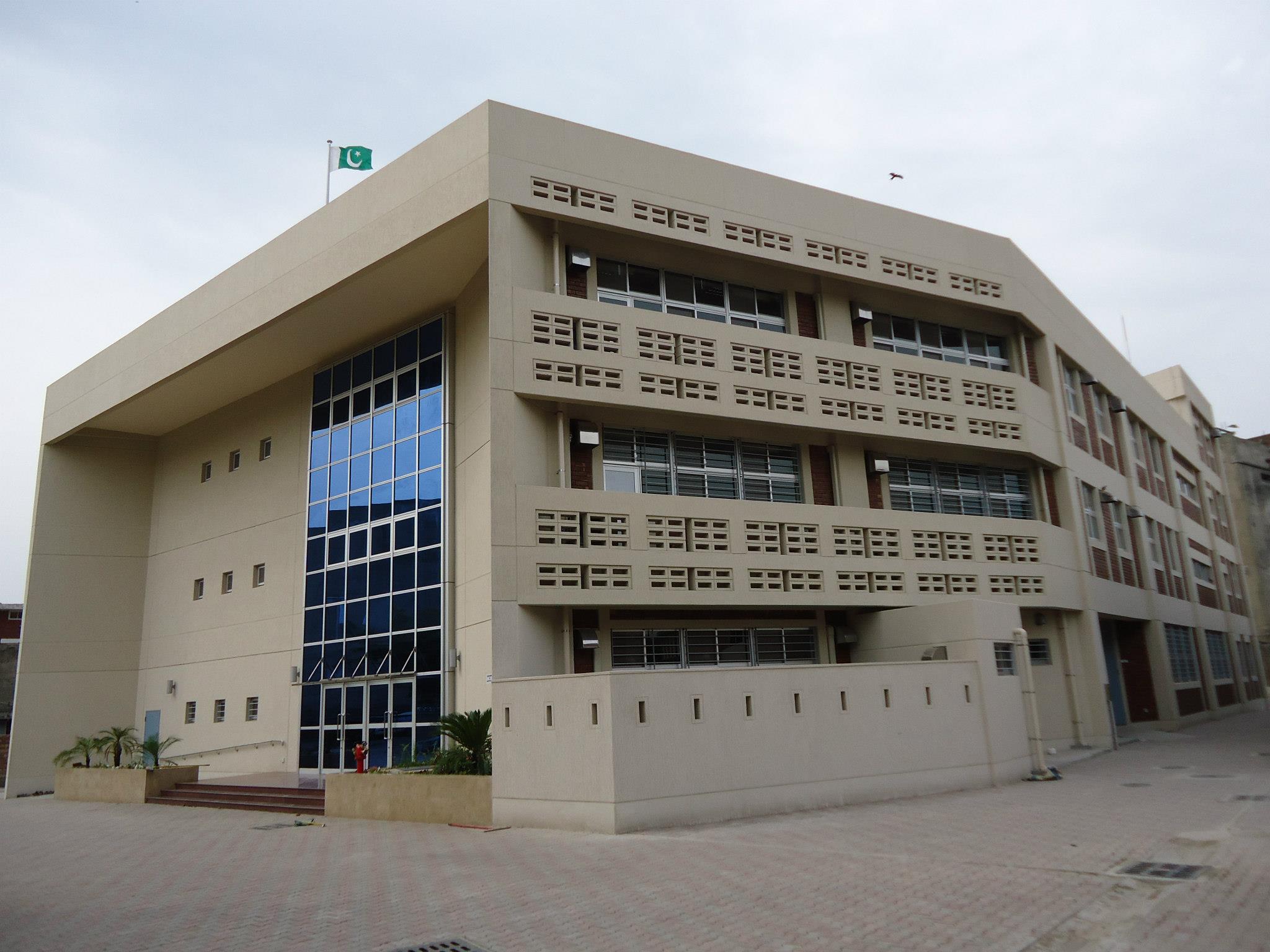
GCT Lahore — DAE Mechanical and Architecture Departments (2012–2013) PECT delivered air conditioning and ductwork installation for the strengthened Mechanical and Architecture departments at Government College of Technology, Lahore, in partnership with Sanyo Engineering. This Japanese Grant Aid project improved technical education infrastructure for students in disciplines directly connected to engineering practice — a project that carries a particular resonance given PECT’s own engineering identity.
VRV/VRF Technology: Modern Climate Control for Complex Buildings
Variable Refrigerant Volume (VRV) and Variable Refrigerant Flow (VRF) systems represent one of the most significant advances in building climate control in recent decades. Rather than a single central system serving an entire building uniformly, VRV systems allow different zones to be cooled or heated independently — responding to actual occupancy and use, rather than running at full capacity regardless of need.
For complex buildings with mixed-use spaces, varying occupancy patterns, or requirements for simultaneous heating and cooling in different areas, VRV technology offers both operational flexibility and meaningful energy savings over conventional systems.
PECT is a Daikin Authorized Installer, certified by Daikin Industries — the world’s leading HVAC manufacturer — for the installation and commissioning of Daikin VRV systems. This authorization means factory-trained technicians, genuine Daikin equipment and components, and manufacturer-backed warranty coverage. It is a credential that matters for building owners and facility managers who need long-term system reliability, not just a completed installation.
Commissioning: Where Systems Are Truly Tested
A common shortcoming in HVAC installation is insufficient commissioning — the systematic process of testing, adjusting, and verifying that every component performs as designed before a building is occupied or handed over.
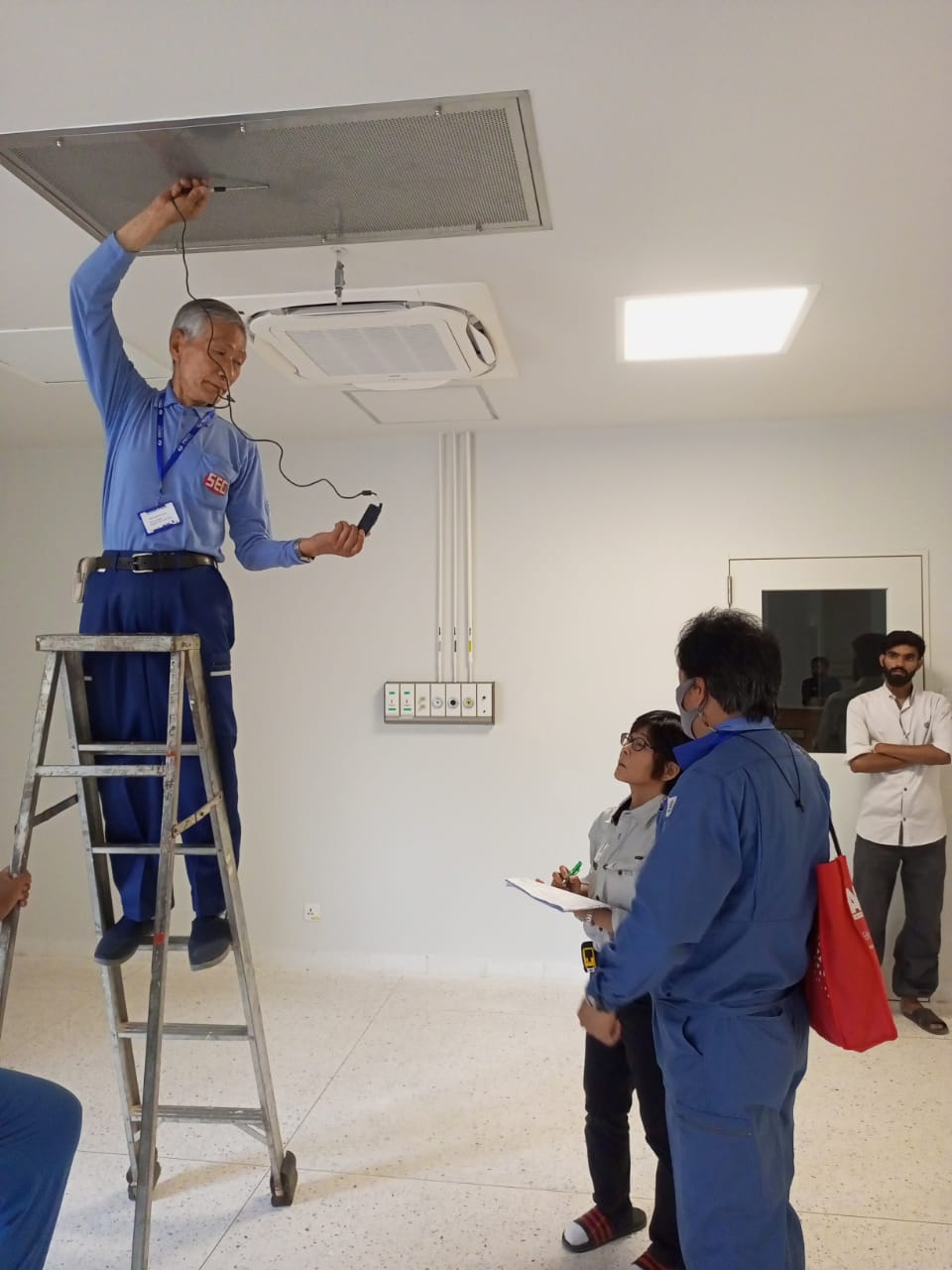
Commissioning matters because it is the difference between a system that has been installed and a system that actually works. Ductwork leakage, imbalanced air distribution, control configuration errors, and refrigerant issues are all normal construction variables that proper commissioning identifies and resolves. Without it, a building may operate for years with a system that consumes more energy than it should, delivers less control than it was designed for, and accumulates accelerated wear from unresolved issues.
For every HVAC installation, PECT carries out systematic testing, balancing, and verification before handover — with documentation that forms part of the permanent facility record. For healthcare and diplomatic clients particularly, this standard is not negotiable.
Maintenance: The Hidden Half of HVAC Performance
The operational life of a well-installed HVAC system is measured in decades. The initial installation is one chapter — what follows determines whether the system delivers its intended performance for its full design life, or whether it degrades progressively as components go unmaintained.
Filters not changed on schedule increase static pressure and reduce airflow — and in healthcare settings, become vectors for contamination. Coils that accumulate dirt lose heat transfer efficiency. Refrigerant systems that develop minor leaks lose capacity before eventually failing.
A structured preventive maintenance programme catches these issues before they become performance failures. For critical facilities, this is not optional — it is the engineering standard that responsible facility management requires. PECT offers maintenance contracts that extend the professional relationship beyond installation, ensuring that the systems we deliver continue to perform at the standard they were built to meet.
Building for Pakistan’s Climate, Not Around It
The fundamental principle of HVAC engineering in Pakistan is straightforward: engineer for the conditions that exist, not for the conditions that would make engineering easier.
That means systems commissioned for peak summer performance. It means the redundancy that critical facilities require. It means the attention to ductwork, controls, and air distribution that determines whether a system delivers what it was designed for. And it means maintenance frameworks that preserve that performance across the operational life of the building.
For over thirty years, PECT has delivered climate control systems across Pakistan’s most demanding project environments — hospitals, diplomatic buildings, educational institutions, and industrial facilities — working alongside Japan’s leading engineering firms to international standards. As temperatures rise across the country each summer, those systems continue operating in the facilities where reliable HVAC is not a preference. It is a requirement.