
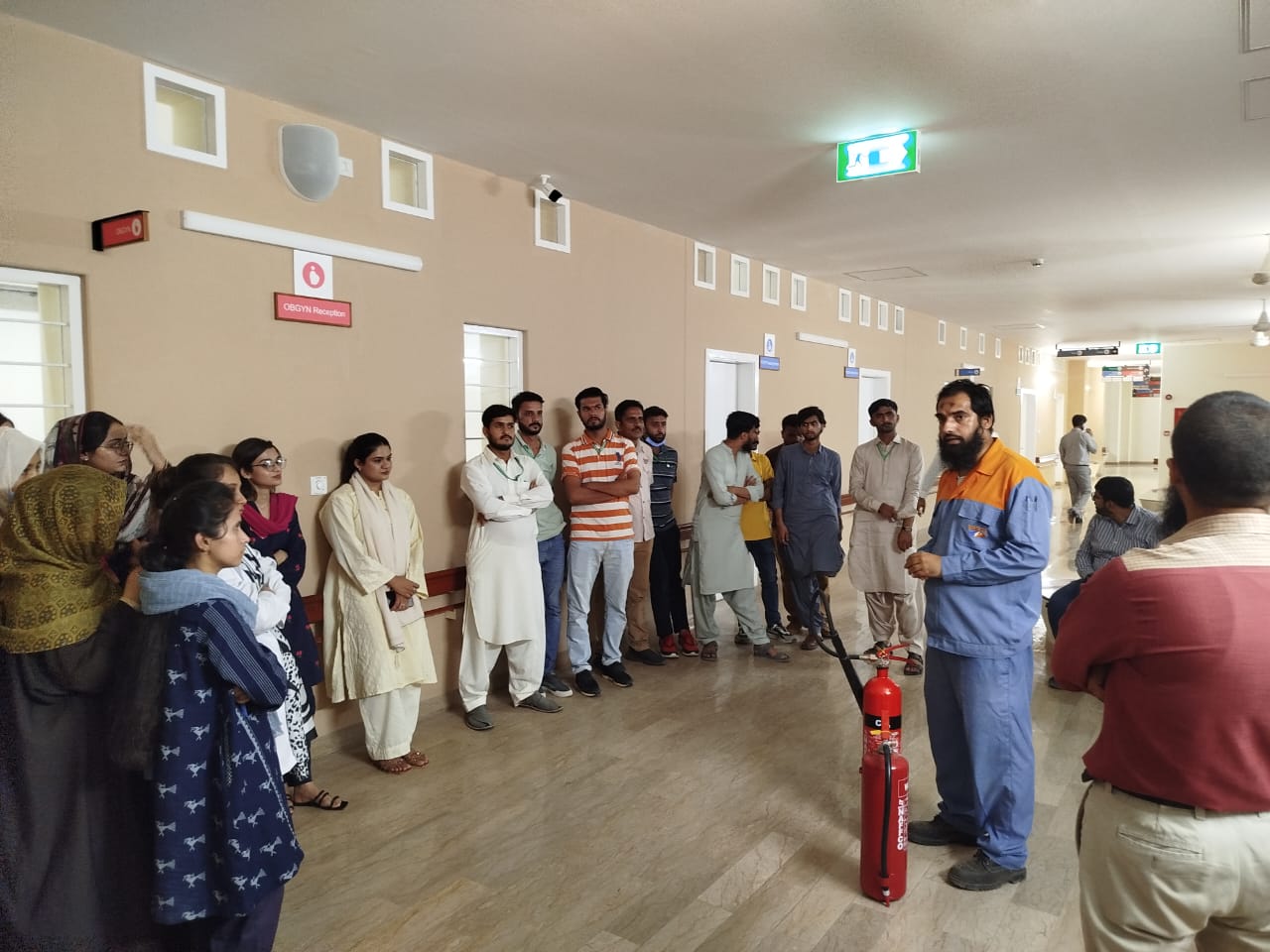
- PECT Digital
- 0 Comments
- 21 Views
A Comprehensive Guide to Fire Safety in Critical Facilities
Introduction: When Seconds Determine Survival
The recent fire tragedies in Karachi and Lahore have once again reminded Pakistan of a sobering reality: fire safety infrastructure isn’t optional—it’s essential life-saving equipment that stands between manageable emergencies and devastating tragedies.
Every year, fires claim lives and destroy property across Pakistan, often in buildings where proper fire protection systems were absent, inadequate, or poorly maintained. While we mourn these losses, we must also recognize that many of these tragedies are preventable through proper fire safety engineering.
For over three decades, PECT Private Limited has designed and installed comprehensive fire protection systems across Pakistan’s most critical facilities—hospitals where vulnerable patients depend on continuous care, schools where children learn, factories where workers earn their livelihoods, and government buildings serving the public. Our experience has taught us that effective fire protection isn’t about installing equipment; it’s about engineering integrated life safety systems that work reliably when every second counts.
This article explains what comprehensive fire protection systems are, why they matter, and how proper engineering makes the difference between safety and tragedy.
Understanding Fire Protection: Layers of Life Safety
Effective fire protection isn’t a single system—it’s multiple layers working together to detect fires early, suppress them quickly, facilitate safe evacuation, and support firefighting operations.
Layer 1: Fire Detection and Alarm Systems
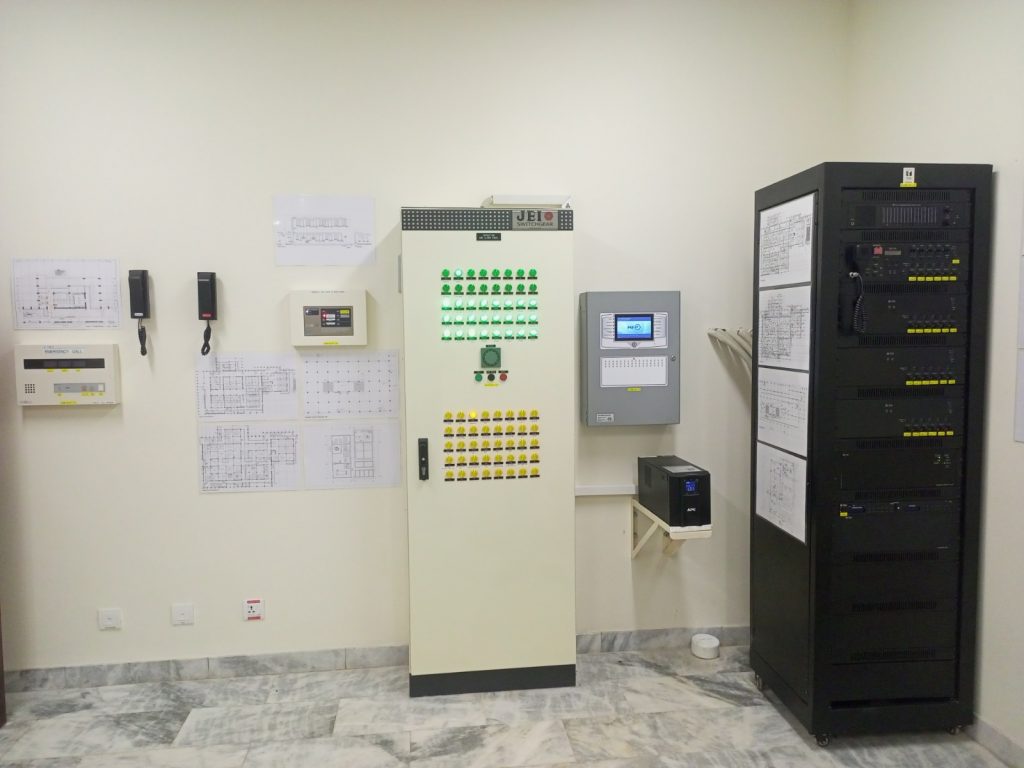
Early detection saves lives. The faster a fire is detected, the more time occupants have to evacuate and firefighters have to respond.
Modern Fire Alarm Systems Include:
- Addressable Fire Detection: Advanced systems like Hochiki provide precise location identification, telling building management exactly where fire or smoke is detected—not just “somewhere on the third floor” but “Room 305, east wing.”
- Smoke and Heat Detectors: Multiple sensor types ensure fires are detected regardless of how they start—smoldering fires produce different signatures than fast-burning fires.
- Manual Pull Stations: Allow occupants to manually trigger alarms when they discover fire before automatic systems detect it.
- Audio-Visual Notification: Loud alarms and strobe lights ensure all occupants—including those with hearing impairments—are alerted immediately.
- Integration with Building Systems: Modern fire alarm systems communicate with HVAC (shutting down air handling to prevent smoke spread), elevators (recalling to ground floor), and door release systems (unlocking emergency exits).
PECT’s Experience: Our installations of Hochiki addressable fire alarm systems at LUMHS Jamshoro Children’s Hospital, PIMS facilities, Honda Motor Pakistan Manufacturing Facility, etc. provide real-time monitoring and immediate notification—critical minutes that enable safe evacuation before conditions become deadly.
Layer 2: Fire Suppression Systems
Automatic suppression systems control fires before they spread, buying critical time for evacuation and firefighter response. Depending on the facility type and hazard level, different suppression approaches are applied — including dry pipe systems for areas where freezing is a concern, and specialized suppression solutions for high-risk spaces like mechanical rooms and storage areas. PECT designs and installs suppression systems appropriate to each facility’s specific occupancy and fire hazard profile.
PECT’s Capability: We design and install wet pipe, dry pipe, and deluge systems across hospitals, factories, educational institutions, and commercial buildings—each system engineered specifically for the occupancy type and fire hazards present.
Layer 3: Fire Hydrant Systems
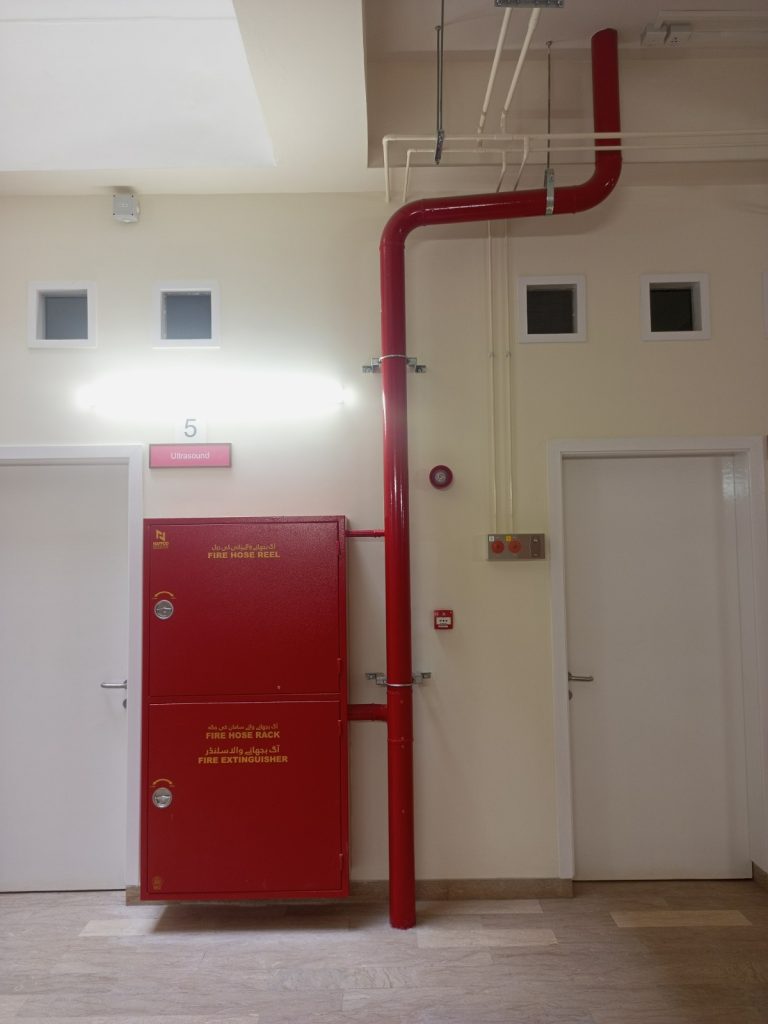
Water supply for firefighting operations. When firefighters arrive, they need immediate access to large volumes of water. Fire hydrant systems provide this critical resource.
Components of Fire Hydrant Systems:
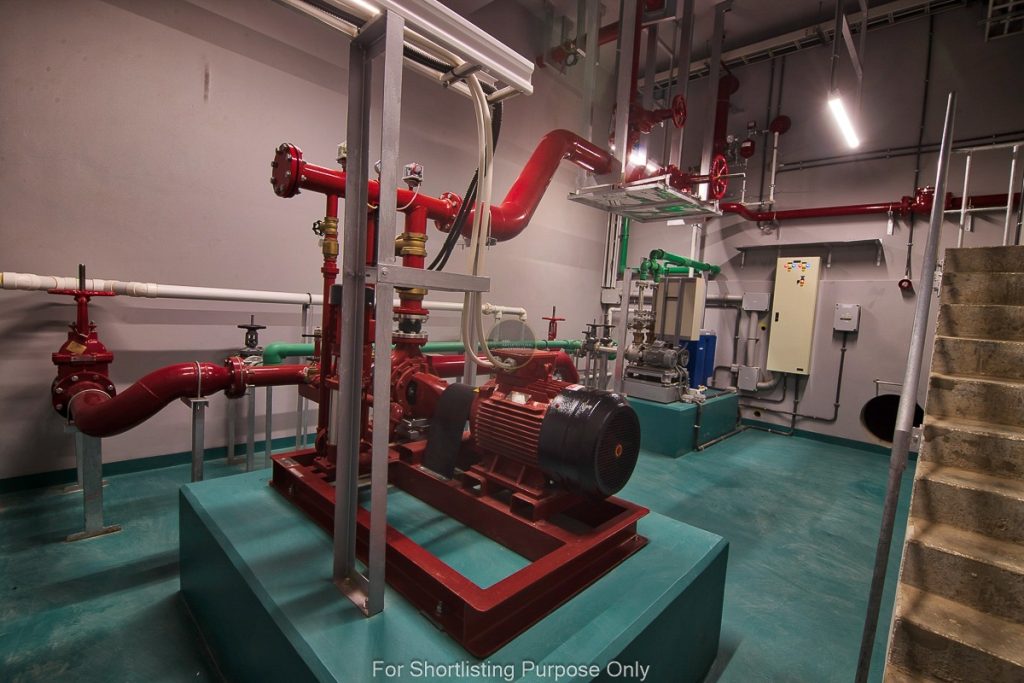
Fire Pumps: Our recent LUMHS Jamshoro installation features a Naffco 500 GPM (gallons per minute) fire pump system—industrial-grade equipment capable of delivering high-pressure water throughout the facility’s hydrant network.
Fire pump systems typically include:
- Electric Pump: Primary pump powered by facility electrical supply
- Jockey Pump: Small pump maintaining system pressure, preventing main pumps from cycling unnecessarily
Fire Water Storage: Dedicated water storage tanks ensure adequate water supply even if municipal supply fails during emergencies. Tank sizing depends on facility size, occupancy, and required flow duration (typically 30-90 minutes of full-flow operation).
Hydrant Network: Indoor and outdoor fire hydrants positioned throughout facilities provide firefighters with multiple water access points. Proper spacing ensures no area is more than 100 feet from a hydrant.
NFPA Standards Compliance: All PECT fire hydrant installations follow National Fire Protection Association (NFPA) standards—the internationally recognized fire safety codes used worldwide. This includes pressure testing, flow testing, and commissioning to verify systems will perform as designed during actual emergencies.
Layer 4: Fire Cabinets and First-Response Equipment
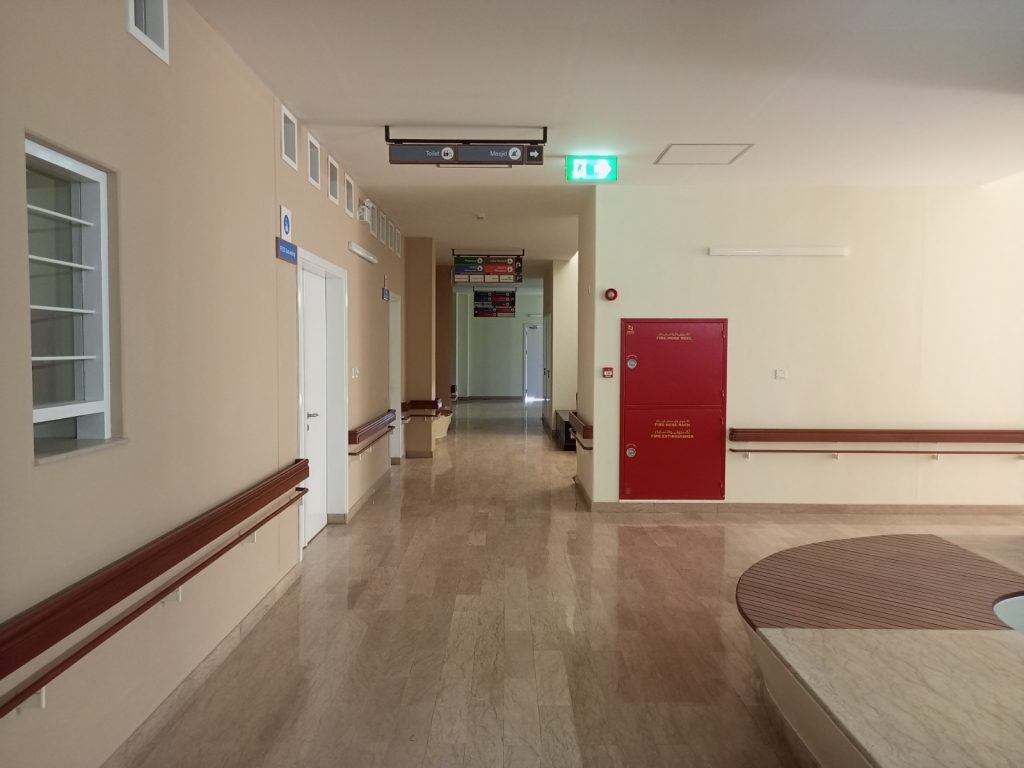
Immediate firefighting tools for trained personnel. Before firefighters arrive, building occupants and security staff need tools to fight small fires or protect evacuation routes.
Fire Cabinets Include:
- Fire hoses with nozzles
- Fire extinguishers (CO2, dry chemical, water-based—selected based on fire types expected)
- Emergency lighting
Strategic Placement: Fire cabinets are positioned along evacuation routes and near high-risk areas (kitchens, mechanical rooms, storage areas) ensuring immediate access during emergencies.
Layer 5: Building Integration and Management
Modern fire protection integrates with building systems:
- HVAC Integration: Fire alarm triggers automatic HVAC shutdown, preventing smoke circulation through ventilation systems
- Elevator Control: Fire mode automatically recalls elevators to ground floor, preventing occupants from becoming trapped
- Door Release: Electromagnetic locks release on fire alarm, ensuring emergency exits aren’t blocked
- Emergency Lighting: Battery-backed lighting activates when power fails, illuminating evacuation routes
Case Study: LUMHS Jamshoro Children’s Hospital Fire Protection
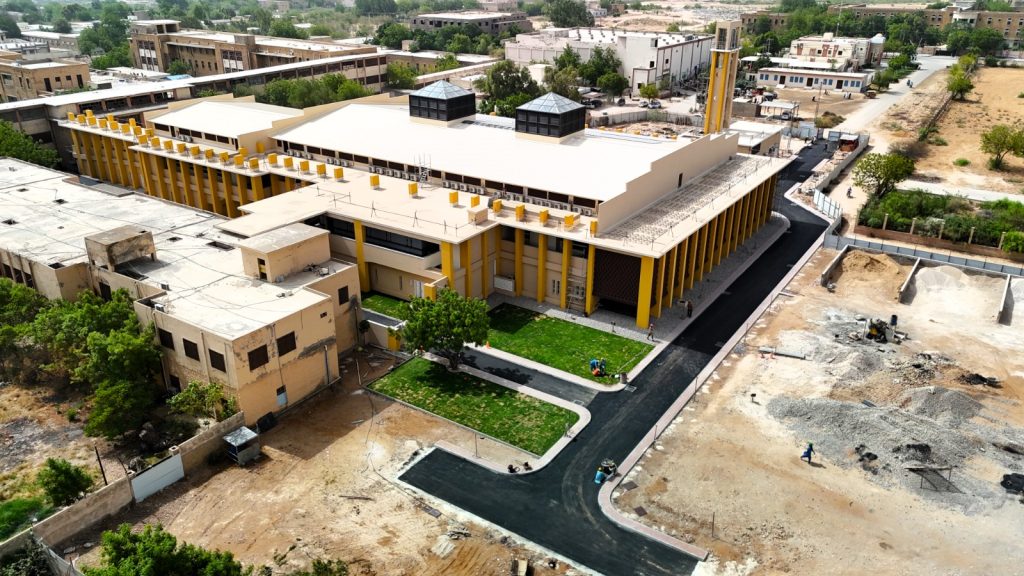
Let’s examine a real PECT installation demonstrating comprehensive fire protection in one of Pakistan’s most vulnerable occupancies: a pediatric hospital.
Project Overview
Facility: Child Health Institute Extension, Liaquat University of Medical & Health Sciences (LUMHS), Jamshoro, Sindh
Completed: 2025
Project Value: PKR 927 Million (PECT MEP scope)
Main Contractor: Tobishima Corporation
Challenge: Protecting hospitalized children who cannot evacuate independently
Why Hospitals Present Unique Fire Safety Challenges
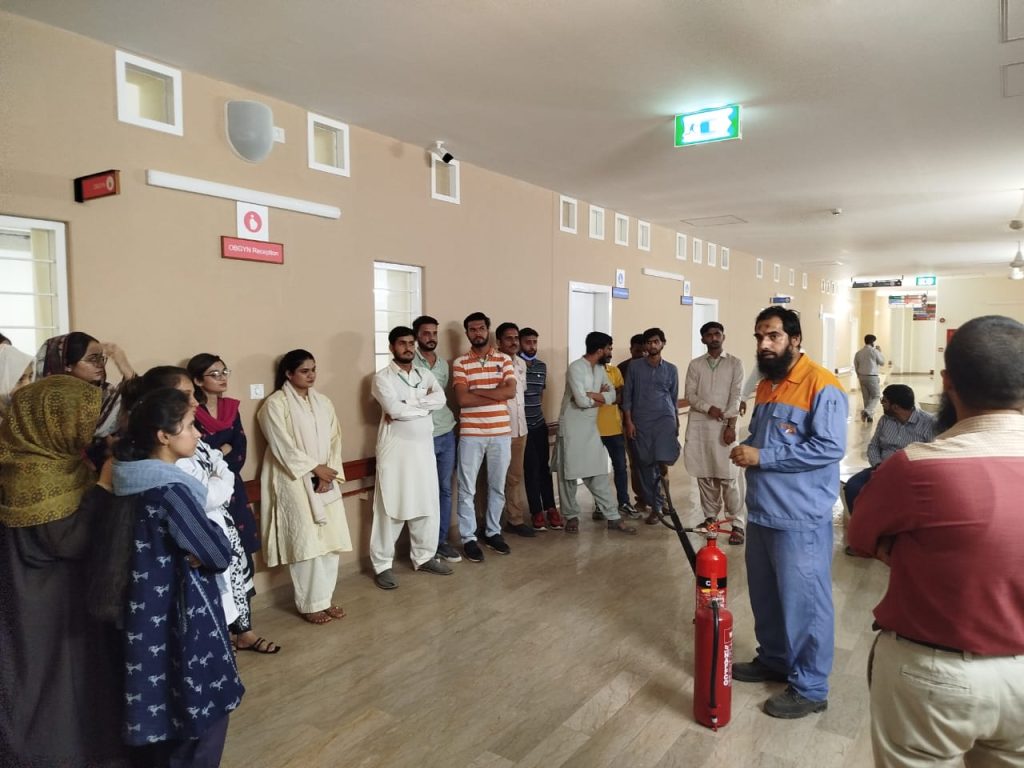
Hospitals are among the most challenging facilities to protect from fire:
- Vulnerable Occupants: Patients in ICUs, on ventilators, or in pediatric wards cannot evacuate without assistance
- 24/7 Operations: Fire protection must never interrupt critical medical care
- Complex Systems: Medical gas systems, electrical equipment, and HVAC require careful fire safety integration
- High Fire Loads: Oxygen-rich environments, electronic equipment, and stored materials create fire hazards
PECT’s Fire Protection Solution
Fire Alarm System: Hochiki addressable fire alarm system providing:
- Zone-specific fire detection in patient rooms, corridors, surgical areas, and support spaces
- Immediate notification to nursing stations and security
- Integration with hospital building management system
- Battery backup ensuring operation during power failures
Fire Hydrant System: Naffco 500 GPM firefighting pump system including:
- Electric motor-driven primary pump
- Diesel-driven backup pump (operates during power failures)
- Jockey pump maintaining system pressure
- Complete indoor hydrant network throughout hospital
- Outdoor hydrants for firefighter access
- 2000-liter fuel storage for extended diesel pump operation
- Pressure testing and commissioning to NFPA standards
Fire Suppression: Sprinkler systems in storage areas, mechanical rooms, and non-patient areas (note: patient care areas typically use smoke compartmentation rather than sprinklers to avoid water damage to sensitive equipment and patient harm).
Fire Cabinets: Strategically positioned fire cabinets with hoses, extinguishers, and emergency equipment along all evacuation routes and near high-risk areas.
The Result: Layers of Protection for Vulnerable Children
The LUMHS Jamshoro fire protection system provides:
- Early Detection: Hochiki system detects fire in earliest stages
- Immediate Notification: Alerts staff to begin patient evacuation procedures
- Automatic Suppression: Sprinklers control fires in non-patient areas
- Firefighter Support: Hydrant system provides water for interior and exterior firefighting
- System Reliability: Backup power, redundant pumps, and NFPA-compliant design ensure systems work when needed
This comprehensive approach recognizes that in a children’s hospital, fire protection isn’t just about saving the building—it’s about protecting lives that cannot protect themselves.
The Engineering That Makes Fire Protection Reliable
Installing fire protection equipment is one thing. Engineering reliable life safety systems is another. Here’s what separates professional fire protection from inadequate systems:
1. Proper Hydraulic Design
Fire pumps and hydrant systems require precise hydraulic calculations:
- Flow Requirements: How much water must be delivered, at what pressure, to which locations simultaneously?
- Pipe Sizing: Undersized pipes create excessive friction loss, reducing pressure at hydrants. Oversized pipes waste money and space.
- Elevation Considerations: Multi-story buildings require pressure calculations accounting for elevation changes
- Demand Calculations: How many hydrants/sprinklers will operate simultaneously during worst-case scenarios?
PECT Approach: Our engineers perform detailed hydraulic calculations for every fire protection system, ensuring adequate water flow and pressure at every hydrant and sprinkler head, even during maximum demand scenarios.
2. Quality Equipment Selection
Not all fire protection equipment is equal. Quality matters when lives depend on systems working during emergencies.
Naffco Fire Pumps: Naffco, a UAE-based manufacturer meeting international fire protection standards, provides:
- Heavy-duty construction for decades of reliable operation
- Redundant systems (electric + diesel pumps)
- Proven performance in demanding environments
- Compliance with international standards
Hochiki Fire Alarm Systems: Hochiki, a Japanese manufacturer known for reliability, offers:
- Addressable detection with precise location identification
- Advanced smoke detection algorithms reducing false alarms
- Integration capabilities with building systems
- Long-term reliability in critical facilities
PECT’s Equipment Philosophy: We specify quality equipment from reputable manufacturers. While cheaper alternatives exist, fire protection systems must work reliably for 20-30 years in emergencies. Initial cost savings mean nothing if systems fail when lives depend on them.
3. Professional Installation
Proper installation is as critical as good design:
- Pipe Welding and Threading: Fire protection piping must be leak-free under high pressure. Our certified welders and pipefitters ensure proper installation.
- Pressure Testing: All systems undergo hydrostatic testing before commissioning.
- Flow Testing: Verification that design flow rates are achieved at required pressures.
- Wiring and Integration: Fire alarm systems require proper wiring, grounding, and integration with building systems.
4. Commissioning and Testing
Before any fire protection system becomes operational, comprehensive commissioning ensures everything works as designed:
- Pump Performance Testing: Verifying pumps deliver design flow at design pressure
- Alarm Testing: Confirming every detector, pull station, and notification device functions correctly
- Integration Testing: Verifying fire alarm properly controls HVAC, elevators, doors, and other building systems
- Flow Testing: Measuring water flow and pressure at all hydrants and sprinkler system test connections
- Documentation: Creating as-built drawings, operation manuals, and maintenance schedules
PECT’s Commissioning Process: We don’t just install systems—we prove they work. Every PECT fire protection installation undergoes rigorous testing and commissioning before handover, with complete documentation provided to facility operators.
5. Maintenance and Training
Fire protection systems require ongoing maintenance and operator training:
- Regular Testing: Monthly, quarterly, and annual testing per NFPA schedules
- Maintenance Contracts: Preventive maintenance ensuring systems remain operational
- Operator Training: Teaching facility staff how systems work, how to respond during alarms, and basic troubleshooting
- Record Keeping: Documenting all tests, inspections, and maintenance activities
Fire Protection Across Different Facility Types
PECT has installed fire protection systems across diverse facility types, each with unique requirements:
Healthcare Facilities
Challenges: Vulnerable occupants, 24/7 operations, critical equipment
Solutions: Addressable detection for precise location, hydrant systems for firefighter access, smoke compartmentation protecting patients unable to evacuate
PECT Projects: PIMS Mother & Child Care Hospital, LUMHS Jamshoro, Child Health Institute Karachi
Educational Institutions
Challenges: High occupant density, young children, public assembly
Solutions: Comprehensive detection and alarm ensuring rapid notification, sprinkler protection in buildings, fire drills and evacuation training
PECT Projects: 30+ primary schools and elementary colleges (NWFP), Teacher Training College Lahore, Plastic Technology Training Centre
Industrial Facilities
Challenges: Flammable materials, high-value equipment, process continuity
Solutions: Deluge systems for high-hazard areas, industrial-grade hydrant networks, integration with process shutdown systems
PECT Projects: Honda Atlas Factory, YKK Factory Phase II
Diplomatic and Government Facilities
Challenges: Security concerns, critical operations, stringent safety requirements
Solutions: Comprehensive fire protection meeting international standards, integration with security systems, backup systems ensuring continuous protection
PECT Projects: Embassy of Japan (Kabul, Islamabad), Japanese School, government ministries
Commercial Buildings
Challenges: Mixed occupancies, high-rise evacuation, property protection
Solutions: Standpipe systems supporting firefighting on upper floors, smoke management systems
NFPA Standards: The International Benchmark for Fire Safety
PECT designs all fire protection systems to National Fire Protection Association (NFPA) standards—the internationally recognized codes used worldwide for fire safety.
Why NFPA Compliance Matters:
NFPA standards represent decades of fire safety research, real-world fire investigations, and engineering best practices. Following these standards ensures:
- Systems are properly designed for their specific application
- Equipment is sized correctly for the hazards protected
- Installation meets quality standards proven to work
- Systems will perform reliably during actual emergencies
PECT’s NFPA Expertise: Our engineers are trained in NFPA standards application. We don’t just claim NFPA compliance—we engineer, install, test, and document systems meeting these international standards.
Common Fire Protection Myths Debunked
Myth 1: “Fire extinguishers are enough fire protection.”
Reality: Fire extinguishers are for very small fires (trash can size) discovered early. They cannot control room-and-contents fires. Comprehensive fire protection requires detection, suppression, and hydrant systems.
Myth 2: “Fire protection systems are too expensive.”
Reality: Fire protection represents 1-3% of building construction cost but can prevent 100% loss. The question isn’t “Can we afford fire protection?” but “Can we afford to operate without it?”
Myth 3: “Manual firefighting with hoses and extinguishers is sufficient.”
Reality: Manual firefighting requires people present, trained, equipped, and willing to fight fire. Automatic systems work 24/7 whether anyone is present or not, and they don’t panic or flee.
Myth 4: “Fire protection is just about compliance with regulations.”
Reality: Fire protection is about protecting lives and property. Regulations set minimum standards, but good engineering considers actual facility risks, not just code minimums.
What Facility Owners and Managers Should Know
If you’re responsible for a hospital, school, factory, commercial building, or government facility, here’s what you need to know about fire protection:
Questions to Ask Your MEP Contractor
- Design Basis: “How did you calculate fire pump sizing?”
- Equipment Specifications: “What brands are you specifying, and why?”
- Standards Compliance: “Which NFPA standards apply to our facility, and how does your design meet them?”
- Testing and Commissioning: “What testing will be performed before handover?”
- Documentation: “What operation and maintenance documentation will we receive?”
- Maintenance Requirements: “What ongoing testing and maintenance is required?”
Red Flags Indicating Inadequate Fire Protection
- Contractor cannot explain hydraulic calculations or design basis
- Generic proposals without facility-specific engineering
- Significant undercuts on pricing (suggesting equipment or scope reductions)
- No mention of NFPA standards or testing procedures
- Reluctance to provide equipment specifications or manufacturer datasheets
- No commissioning or testing included in scope
Green Flags Indicating Quality Fire Protection Engineering
- Detailed hydraulic calculations and design documentation
- Quality equipment from reputable manufacturers (Naffco, Hochiki, etc.)
- Clear testing and commissioning procedures
- NFPA standards compliance demonstrated
- Comprehensive documentation and operator training included
- Maintenance recommendations and support offered
The PECT Difference: Three Decades of Fire Safety Engineering
What distinguishes PECT’s approach to fire protection systems:
1. Engineering, Not Just Installation
We don’t install generic fire protection systems. We engineer life safety solutions specific to each facility’s occupancy, hazards, and requirements.
2. Quality Equipment
We specify reputable manufacturers (Naffco, Hochiki) whose equipment has proven reliable in critical facilities worldwide.
3. NFPA Standards Compliance
All systems designed, installed, tested, and documented to international NFPA standards.
4. Comprehensive Testing and Commissioning
Every system undergoes rigorous testing before handover. We prove systems work—we don’t just claim they do.
5. Complete Documentation
As-built drawings, operation manuals, maintenance schedules, and test records provided for every installation.
6. Integrated Approach
As full-scope MEP contractors, we ensure fire protection integrates seamlessly with electrical, mechanical, HVAC, and building management systems.
7. Long-Term Reliability
Systems we installed in 1991 still protect facilities today. That’s the result of quality engineering, equipment, and installation—not luck.
Conclusion: Fire Protection Is a Professional Responsibility
Recent fire tragedies in Karachi, Lahore, and across Pakistan remind us that fire safety isn’t optional—it’s a moral and professional responsibility.
Every building where people live, work, learn, or receive care deserves fire protection systems that will work reliably when lives depend on them. This requires:
- Proper Engineering: Hydraulic calculations, equipment sizing, standards compliance
- Quality Equipment: Reputable manufacturers, not cheapest alternatives
- Professional Installation: Certified contractors, proper testing, complete commissioning
- Ongoing Maintenance: Regular testing, preventive maintenance, operator training
PECT Private Limited has spent three decades engineering fire protection systems that protect Pakistani lives and property. From the children’s hospital in Jamshoro to factories in Karachi, from schools in NWFP to diplomatic facilities in Islamabad, our installations demonstrate that properly engineered fire protection makes the difference between safety and tragedy.
Fire protection isn’t just our business—it’s our contribution to a safer Pakistan.
When lives depend on fire protection systems working during emergencies, engineering expertise and quality cannot be compromised.
About PECT Private Limited
PECT Private Limited is Pakistan’s leading MEP (Mechanical, Electrical, Plumbing) contractor, specializing in comprehensive building services for critical facilities.. With over 30 years of experience executing Japanese Grant Aid projects and complex installations across healthcare, education, industrial, and government sectors, PECT brings international engineering standards to Pakistani infrastructure.
Fire Protection Expertise:
- Naffco fire pump systems and hydrant networks
- Hochiki fire alarm and detection systems
- NFPA standards compliance
- Complete testing and commissioning
- Maintenance and support services
Contact PECT:
Website: www.pect.com.pk
Email: [email protected]
Phone: (92 51) 2817 575, 76, 77, 78
For fire protection system design, installation, or consultation, contact PECT Private Limited—engineering life safety infrastructure across Pakistan since 1991.